A useful test for any food claim is whether it survives being stated plainly. "This tomato was picked this morning three streets away, and the one at the store was picked underripe a week ago several hundred miles away" survives easily. Some other popular claims survive less well. The case below sticks to the first kind.
The short version
The bankable benefits of local food are freshness and flavor (a logistics fact, not marketing), money staying with nearby households, knowing exactly how your food was produced because you can ask the producer, less packaging and waste, and the un-ironic pleasure of a neighborhood where people feed each other. The overstated benefit is food miles as an environmental cure-all — how food is grown matters more than how far it travels. The honest case needs no exaggeration; the fresh half of it you can taste.
Freshness: the unbeatable argument
Everything a supermarket does well — consistency, availability, price — depends on produce that can survive storage and transport. That single requirement dictates what varieties get planted (durable ones), when they get picked (early), and how they reach you (days to weeks later, via cold storage). None of this is villainy; it is logistics. But it means the store ceiling for fragile, flavor-critical crops is permanently low.
Local food simply opts out of the logistics. A grower selling within a few miles can plant varieties chosen for taste rather than shipping, pick at actual ripeness, and hand food over the same day. For tomatoes, berries, sweet corn, lettuce and stone fruit, the difference is not subtle and requires no palate training — it is the reason "you can't buy a real tomato anymore" is a folk saying. Sugar-to-starch conversion, moisture loss and aroma fade all run on clocks measured in hours and days; the only way to beat the clock is to shorten the distance.
Money that stays in the neighborhood
A dollar spent on supermarket produce is divided across a long chain — grower, shipper, distributor, retailer — most of it far away. A dollar handed to a neighborhood grower stays whole and stays close, and for the smallest sellers it does something the supply chain never does: it changes what exists next season. The backyard grower whose surplus sells plants more next year. The egg-keeper whose dozens have a waiting list adds hens. Buying local is, quite literally, voting for more local food to exist — and unlike most economic claims, you can watch this one come true over a couple of seasons.
Knowing how your food was produced
Labels compress; conversation does not. Buying from the person who grew or made your food replaces the entire apparatus of certification and label-reading with something better: asking. What variety is this? What do you spray, if anything? What do the hens eat? What is in the jam? A local seller answers from direct knowledge, usually with more detail than you wanted, and you can see the garden over their shoulder. The habit of asking is covered in the buying guide; the point here is that this transparency is not an add-on to local food — it is structural. There is no anonymous middle in a transaction that happens across a fence.
The environmental case, told straight
Here is where honesty earns its keep. The most famous claim — fewer "food miles," smaller footprint — is weaker than its popularity suggests: for most foods, transport is a modest slice of the total environmental cost, and how something is grown typically outweighs how far it traveled. A local hothouse tomato in January can cost more energy than a shipped field-grown one. Anyone selling local food on food miles alone is overselling.
What local buying does reliably deliver environmentally is quieter: little to no packaging, no cold-chain storage between harvest and table, and — significantly — less waste, because neighborhood surplus that finds an eater is food that did not rot on the vine or in a bin. Seasonal eating, which local buying naturally enforces, also steers you away from the most energy-expensive out-of-season produce. Real benefits, honestly sized.
The community part, which turns out not to be fluff
The soft-sounding benefit ends up being the durable one. Food trade between neighbors creates exactly the kind of low-stakes, repeated, mutually useful contact that neighborhoods are built from. You learn names. Kids see where eggs come from. The honor stand down the street becomes a small local institution, and the gardener with too many tomatoes becomes someone you know rather than a fence you pass. None of this needs romanticizing — it is just what happens when a neighborhood's food stops being anonymous. Most people who start buying locally for the tomatoes stay for this.
How JustRype fits
Every argument above runs into the same practical wall: the best local food — the backyard layer, picked today, priced fairly — has historically been invisible. JustRype exists to remove that wall.
See the local food that actually exists
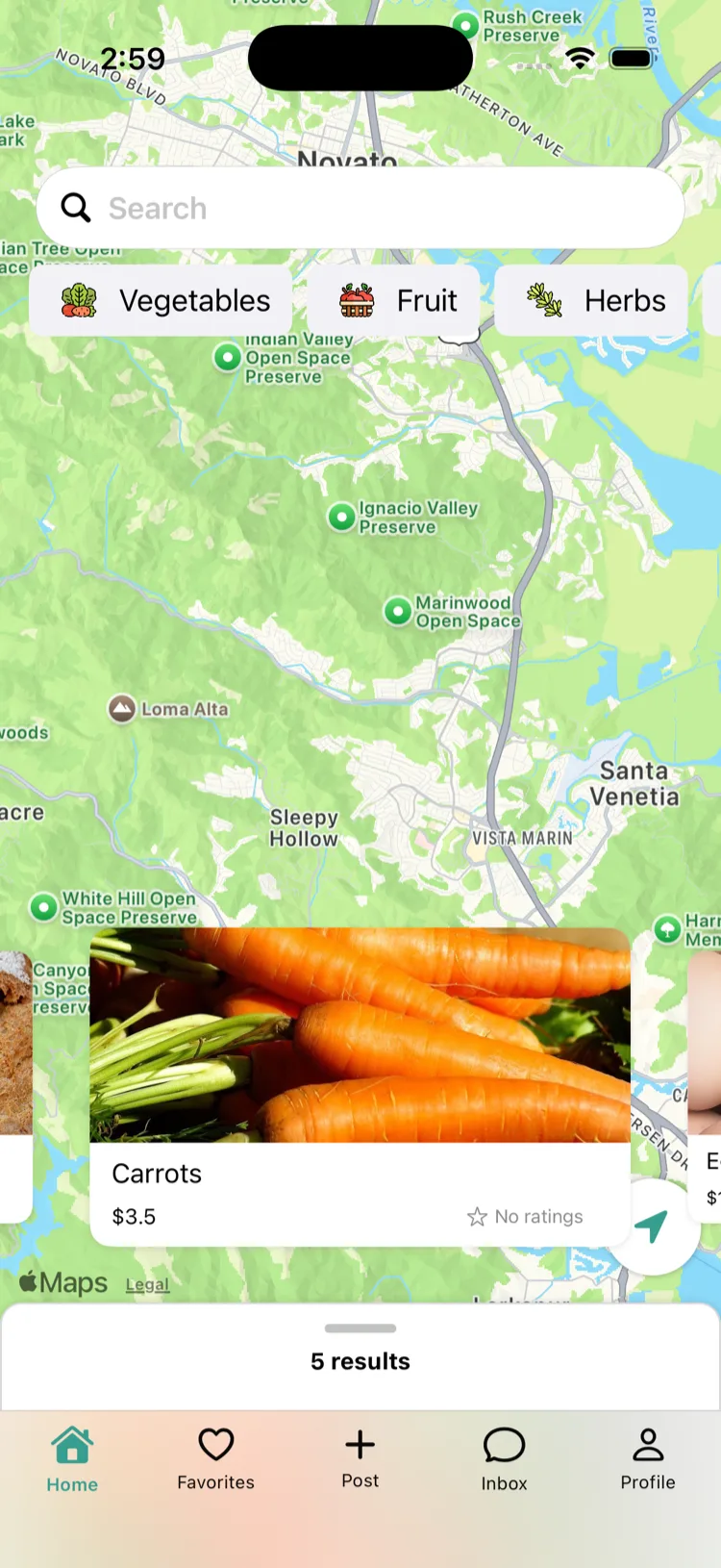
The map shows what neighbors are growing, raising and making near you right now — the layer no directory ever listed. The case for local food stops being abstract when it is three listings within walking distance.
Ask the producer directly
Listing chat is the transparency argument made concrete: every question about growing practices, ingredients or picking day goes straight to the person who knows.
Keep your food dollars close
Buying through the neighborhood map sends the whole price to the grower — and watching a seller you support expand their garden the next season is the local-economy argument, live.
Try the argument on your own table
One week, one swap:
- Pick one item you buy weekly — tomatoes, eggs, honey.
- Find it in season from a nearby seller on the map.
- Ask how it was grown or made — because now you can.
- Taste the difference; check what you paid.
- Decide for yourself. The case makes itself from there.
Frequently asked questions
Is local food actually fresher than supermarket food?
For produce, dramatically so. Supermarket produce is typically picked before peak ripeness to survive days or weeks of storage and transport; food from a nearby farm or garden can be picked at ripeness and eaten within hours. Freshness is the single most defensible advantage of local food — it is a matter of logistics, not marketing. For flavor-critical, fragile crops like tomatoes, berries and sweet corn, the difference is obvious to anyone.
Does buying local really help the local economy?
Yes, in a straightforward way: money paid directly to a nearby grower or maker stays with that household and tends to be re-spent nearby, rather than being distributed across a long supply chain. For very small sellers the effect is concrete — neighborhood sales are what make the garden, flock or hive worth expanding. You can see exactly where your food dollar went, because you handed it to them.
Is local food always better for the environment?
Not automatically, and honest advocates say so. Transport is usually a modest share of food's environmental footprint, so "fewer food miles" alone proves less than it seems; how food is grown matters more than how far it traveled. What local buying reliably does offer: less packaging, less cold-chain storage, less waste from surplus finding an eater instead of a bin, and full visibility into growing practices — you can simply ask. Those are real, just narrower than the slogan.
Is local food more expensive?
It varies by channel. Farmers market prices often run at or above supermarket prices, reflecting small-scale costs. But direct channels — farm stands, u-pick and especially backyard sellers — are frequently cheaper than the store, because there is no stall, shipping or retail margin in the price. In-season neighborhood surplus is some of the best food value available anywhere.
What's the easiest way to start buying local?
Start small and in season: one market visit, or one purchase from a nearby seller, replacing one or two items you already buy. Tomatoes, eggs and honey are classic first swaps because the quality difference is immediate. A neighborhood marketplace app like JustRype makes the first step a browse — open the map, see what is ripe near you, and message the seller.