Honey occupies a strange, fortunate corner of the food-sales world. It is shelf-stable indefinitely, which removes the perishability pressure that rules every other food in this guide library. Demand for the genuinely local article is strong and specific — people seek out honey from their own area by name. And regulators generally treat it as low-risk, which keeps the compliance burden light. The one thing they nearly all care about is the label, so that is where a seller's diligence belongs.
The short version
Check your state's honey rules once — many allow direct sales from your own hives with little or no licensing, but nearly all specify the label: the word "honey," net weight in both units, your name and address, and sometimes rules about "raw" claims. Bottle cleanly in standard jars, price against raw local honey at your farmers market (not the supermarket), and sell the harvest across the whole year — honey waits. Crystallization is natural; explain it and it becomes proof of the real thing.
Honey's own lane in the rules
Honey typically sits in its own regulatory category — not fresh produce, and often not ordinary cottage food either. The arrangements vary by state along a few familiar lines:
- Dedicated honey exemptions in a number of states let beekeepers sell their own honey direct to consumers below a volume threshold, with labeling requirements but no processing license.
- Cottage food coverage in others, where honey appears on the approved list and follows that law's registration and label rules.
- Apiary registration is separately required in many states — registering hive locations with the agriculture department — which is about bee health rather than sales, but is worth handling in the same sitting.
- Sales-channel limits occasionally apply, along the usual direct-to-consumer lines.
Your state beekeepers' association has almost certainly published a plain-language summary of exactly this, and the agriculture department page is the authoritative version. Fifteen minutes covers it. One boundary worth knowing: the light treatment applies to honey. Infused honeys, creamed honey with additions, comb-in-jar products and candles may be classed differently — check before extending the line.
Extraction to jar, honestly
Local honey's premium rests on a simple claim: this is what the bees made, minimally interfered with. Selling it well means protecting that claim in the bottling.
Strain to remove wax and debris — coarse straining preserves the pollen that raw-honey buyers specifically want, and heavy filtration works against your own story. Heat is the other line: warming honey enough to ease bottling is conventional; heating it hot enough to delay crystallization forever is what supermarket processors do, and if you do that, "raw" stops being an honest word for the jar. Most hobby sellers bottle at or near hive temperature and let the honey be what it is.
Jars should be new, clean and standard — regular and wide-mouth canning jars and purpose-made honey jars all work. Fill consistently to a known net weight per jar size, because the label is about to promise one.
The label, done right
Labeling is the honey rule states enforce most consistently. The recurring requirements:
- The product name "honey" — plainly stated.
- Net weight in both US customary and metric units, by weight not volume — the detail most home labels get wrong.
- Your name and address, as producer.
- Any state-specific statements — some states require a home-production disclosure or regulate the word "raw"; a few have rules about floral-source naming.
Claims deserve a beekeeper's honesty. "Raw" should mean minimally heated and filtered. "Wildflower" should describe what your bees plausibly foraged, not what sounds nice. "Local" is your strongest word and, for hives in the neighborhood, simply true. Buyers of local honey are unusually interested in provenance — the seller who can say "the hives are behind the house, extracted in August" in a listing has already written better marketing than any label flourish.
Pricing and jar sizes
Supermarket honey — much of it blended, heated and imported — is not your comparable, and its price should not touch your thinking. The anchor is raw local honey at your farmers market and farm stands, which sells at a substantial premium and still sells out. Backyard honey belongs at or near that local raw price; the general anchoring method is in the pricing guide.
Offer two or three sizes rather than one. A small jar prices low enough for the curious first-timer, the standard pint-class jar is the repeat purchase, and a large jar serves the household that bakes and the December gift buyer. Small jars also make the arithmetic of a limited harvest friendlier — a single extraction stretches across more customers, which matters when this year's honey has to build next year's waiting list.
On crystallization: it will happen, it is natural, and handled openly it becomes an asset. A line in the listing — "raw honey granulates over time; a warm water bath re-liquefies it" — pre-empts the one question every new customer asks. Or go further and cream a batch deliberately; smooth, spreadable creamed honey is a premium product made from the "problem."
Selling a yearly harvest all year
Honey's shelf life changes the selling rhythm completely. There is no race against ripeness — an August extraction can sell steadily until the next one. The sellers who do this well treat it as a seasonal product with a long tail:
- Announce extraction. The fresh-harvest listing is the year's high point; regulars from last year will claim jars immediately.
- Keep a standing listing the rest of the year, refreshed occasionally so the neighborhood knows jars remain.
- Lean into gift seasons. Honey is a default local gift; a December listing mentioning gift jars meets a demand spike you would otherwise miss.
- Pair with the ecosystem. Honey sits naturally on an honor stand beside eggs — shelf-stable, high value, and the reason a passerby stops.
How JustRype fits
"Local honey" is one of the most-searched phrases in local food, and the searcher's problem is always the same: the hives near them are invisible. JustRype makes them findable.
On the map, where honey buyers look
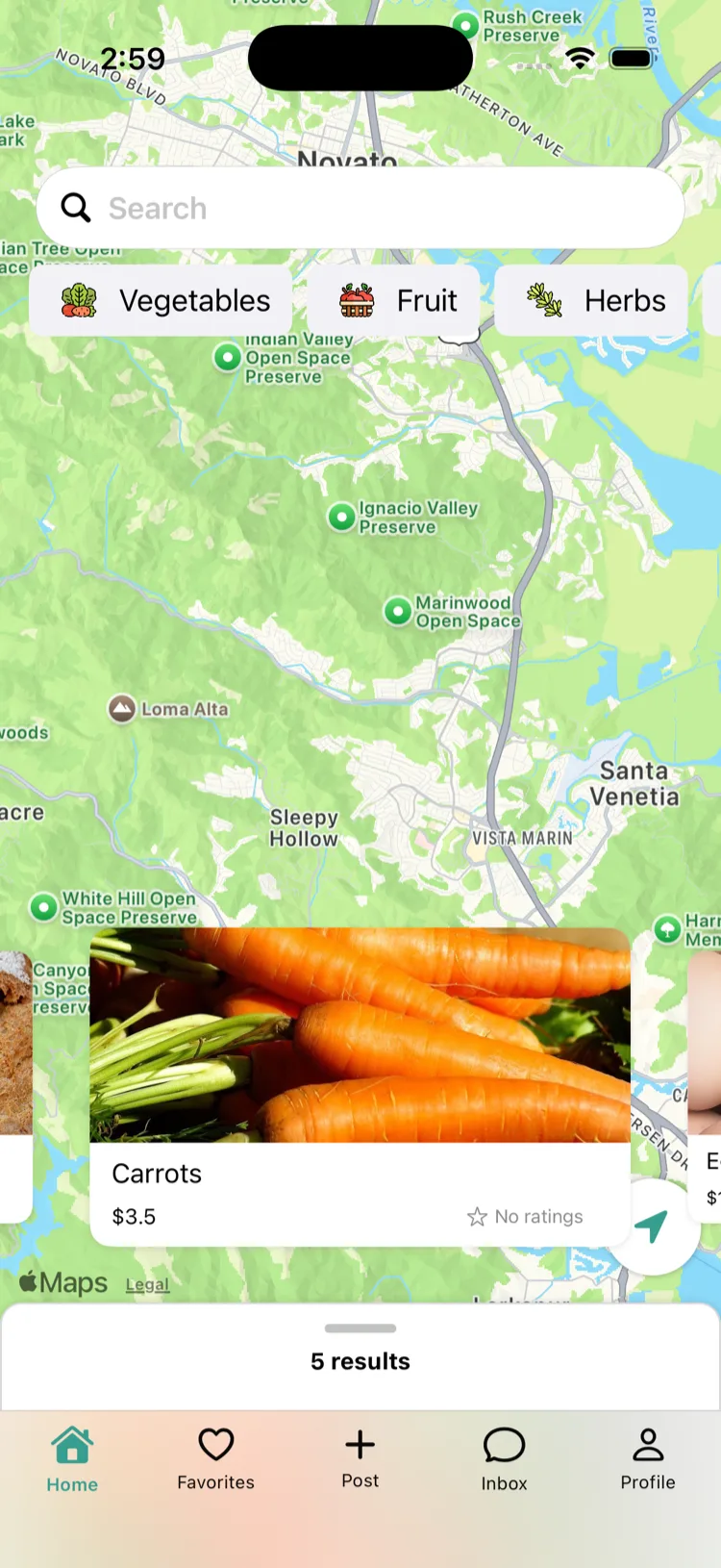
A honey listing with photos, jar sizes and prices sits on the neighborhood map and feed, findable by everyone nearby who wants exactly this. Provenance — the thing honey buyers care most about — is self-evident when the seller is a pin three streets away.
Chat carries the questions
Raw? Crystallized? Which size is left? The listing chat answers buyer questions directly and turns first jars into standing arrangements — the neighbor who takes a large jar every extraction is worth a whole market stall of foot traffic.
A business page for the apiary
When the hives multiply and the honey becomes an annual institution, a business page gives the apiary a permanent home on the map — this year's harvest, sizes available, and the story of the bees behind it.
From buckets to sold jars
The season's checklist:
- Read your state's honey-sales page; register the apiary if required.
- Bottle cleanly in standard jars at consistent net weights.
- Label to the state template — "honey," dual-unit net weight, name and address.
- Price against raw local honey at your nearest market, in two or three sizes.
- Announce the extraction on JustRype and keep a listing live all year.
- Note gift season, and let last year's buyers claim first.
General information, not legal advice
Honey-sales rules, apiary registration and labeling requirements vary by state and change. This guide is general information, not legal or food-safety advice. Verify your requirements with your state agriculture department — your state beekeepers' association is a good plain-language starting point.
JustRype is a venue that connects neighbors. Buyers and sellers are responsible for complying with the laws that apply to them.
Frequently asked questions
Do I need a license to sell honey from my hives?
It varies by state. Many states let small-scale beekeepers sell their own honey direct to consumers with little or no licensing — sometimes under a dedicated honey exemption, sometimes under cottage food law, sometimes with a small apiary registration. Nearly all states have labeling requirements regardless. Search your state's name plus "selling honey" and read the agriculture department page; beekeeping associations in your state usually summarize it well too.
What has to be on a honey label?
Requirements vary, but the recurring elements are: the word "honey" as the product name, the net weight in both US customary and metric units, and your name and address. Some states require a country-of-origin or a home-produced disclosure, and some regulate claims like "raw" or "organic." Floral-source claims like "wildflower" should reflect what your bees plausibly foraged. Copy your state's label template rather than improvising.
How much does local honey sell for?
Raw local honey consistently sells well above supermarket honey — often several times the price per pound — because buyers specifically want unblended, unheated honey from nearby hives. Your anchor is what raw local honey fetches at your farmers market and farm stands, not the grocery shelf. Prices vary by region, so check locally rather than relying on a national figure.
Why does my honey crystallize, and is it still sellable?
Crystallization is natural — most raw honey granulates over weeks to months depending on its floral source, and it indicates nothing wrong. It is absolutely still good. Sell it as-is with a note that gentle warming in a water bath re-liquefies it, or lean into it: smooth creamed honey is a deliberate, sought-after product. Educating buyers on the label or in the listing turns the question into a selling point for raw honey.
Can I call my honey raw or local?
"Raw" generally means not heated beyond hive temperatures and minimally filtered, but some states regulate the term — check before printing it. "Local" is honest when the hives are genuinely nearby, which for a neighborhood seller they are; it is your single strongest selling word. Whatever you claim, be able to describe your process plainly, because local honey buyers ask and reward straight answers.