"Local" spans a huge range — a hundred-acre farm at the county market and a raised bed behind a fence are both local, and both can feed you. The channels below run roughly from most established to most hidden. Most people who eat genuinely local end up mixing two or three: a market habit, maybe a CSA, and the neighborhood layer filling the gaps with the freshest food of all.
The short version
Farmers markets give the widest selection in one trip; farm stands and farm shops give the best prices and the drive-by habit; CSAs give the deepest farm relationship in exchange for choosing less; u-pick gives quantity for preserving. And underneath all of it sits the invisible layer — backyard growers and micro-farms selling steps from your door — which is exactly the layer a neighborhood marketplace like JustRype makes visible. In season, check the map before the store.
Farmers markets: the front door
The farmers market is where most local-food habits start, and for good reason: dozens of growers in one place, peak-season variety, and the chance to talk to the person who grew the food. Market-day tactics are simple — go early for selection, late for occasional deals, and ask questions, because growers are the best free education in what is in season and how to cook it.
One thing worth knowing: not everything at every market was grown by the person selling it. Some markets permit resellers; producer-only markets do not. A grower can always tell you the variety and picking day without blinking — that conversation is your verification, and it is also half the pleasure of shopping this way.
The trade-offs are schedule and price. Markets happen when they happen, typically one or two mornings a week, and prices sit at the top of the local range — you are paying for the stall, the drive and the market's overhead along with the food.
Farm stands, farm shops and u-pick
Between market days, the direct-from-the-farm channels carry the load:
- Roadside and driveway stands — from card tables to honor-system stands stocked daily. Often the best price-to-freshness ratio anywhere, because the food traveled from the garden to the table out front. Bring small bills; many run on a cash box.
- Farm shops — real farms with real hours, often adding eggs, honey and preserves from neighboring producers. Reliable inventory, worth the drive when you want quantity.
- U-pick farms — the quantity play. Berries, orchard fruit and pumpkins at their seasonal peak, priced low because you supply the labor. This is how people who preserve — jam, sauce, freezer — buy their raw material.
The finding problem is real, though: stands appear and vanish with the seasons, and the best ones are on roads you may never drive. This channel rewards local knowledge — or a map that carries it for you.
CSAs: subscribing to a farm's season
A CSA — community supported agriculture — inverts the shopping model. You pay a farm up front for the season and receive a weekly or biweekly share of the harvest: whatever is ready, in whatever quantity the fields produced. The farm gets working capital and a committed customer; you get a standing supply of very fresh food and a genuine stake in one farm's year.
The honest trade-off is choice. The box contains what grew — which delights flexible cooks and defeats strict meal-planners. If the idea appeals, start with a half share or a trial month, and expect to learn some new vegetables; every CSA member has a kohlrabi story.
The invisible layer: your neighbors
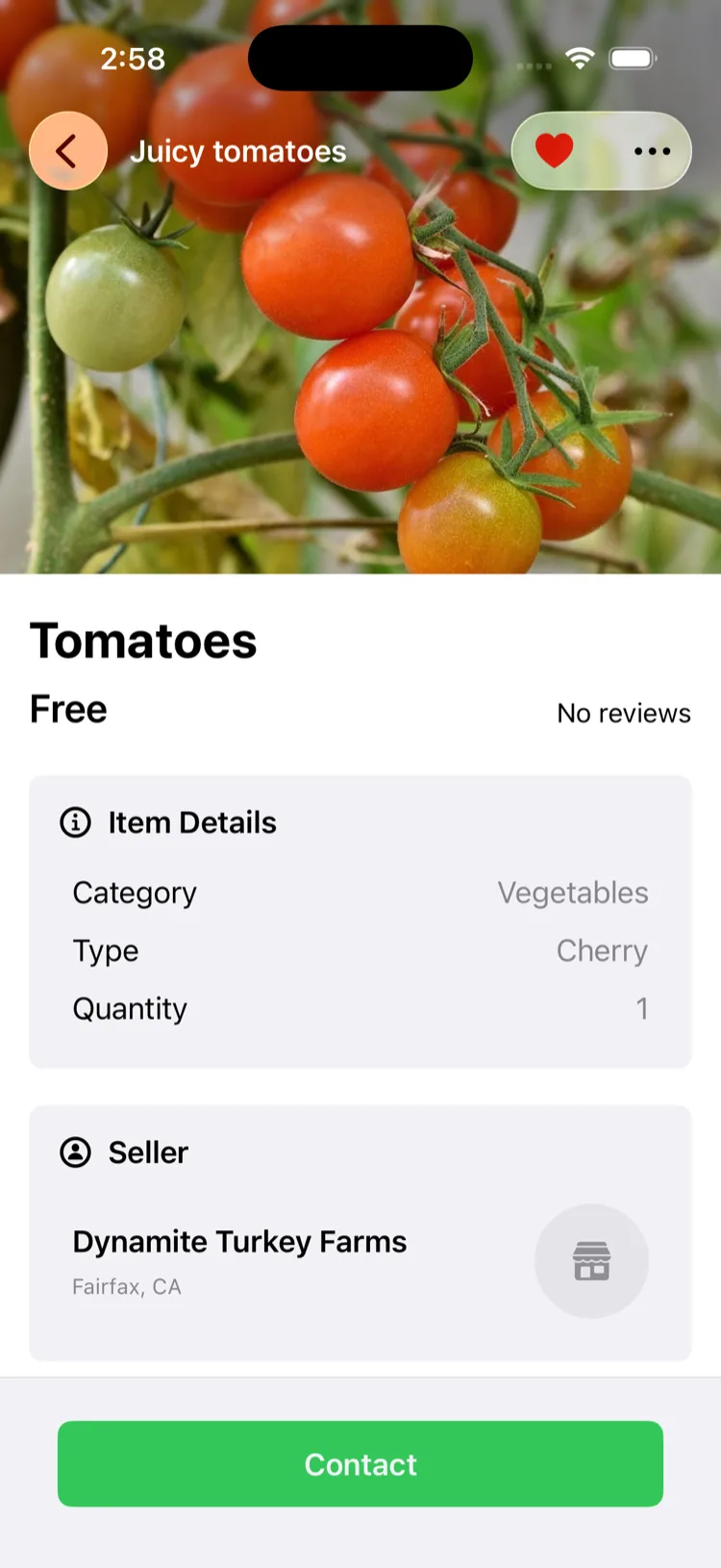
Underneath every official channel sits the one no directory covers: the backyard grower. The gardener with six tomato plants too many. The house with the orchard tree that outproduces the family every August. The small-flock keeper with extra dozens of eggs, the hobby beekeeper with a shelf of honey jars, the micro-farm on a double lot.
This layer has always existed — it just communicated by curbside sign and word of mouth, which means you only found it by luck. Yet it is arguably the best local food there is: picked the same day, grown at backyard scale with backyard care, priced below the market stall because there is no stall to pay for, and close enough to walk. In peak season the quantity of food moving through this layer, or rotting for lack of a buyer, is enormous.
Finding it used to be the hard part. That is the specific problem neighborhood marketplaces exist to solve.
Buy with the season, not against it
Every channel above works best when you work with your region's calendar. In season, local produce is at peak quality, lowest price and maximum abundance — out of season, "local" mostly is not, whatever a label implies. You do not need to memorize a chart: a month of market visits or map browsing teaches your area's rhythm quickly, and the neighborhood layer is self-announcing, because listings surge exactly when things ripen. When you see the first wave of tomato listings, tomato season has arrived; the buyer who responds to abundance eats better and pays less. What to say and bring when you go is covered in the buying from neighbors guide.
How JustRype fits
JustRype is the map for the layer nothing else lists. It puts the neighborhood's growers, keepers and makers on one screen, so finding local food becomes a browse instead of a treasure hunt.
Browse the map, see what's ripe
Open the map and see listings near you — produce picked today, eggs, honey, baked goods, plants and more — with photos, prices and distance. Search for what you want or just see what the neighborhood has this week.
Chat to arrange pickup
Message the seller in the app, agree on a time, and walk over. No middleman, no shipping — the whole transaction is a conversation and a short trip.
Farm stands and farms, pinned
Established sellers — the honor stand, the u-pick farm, the market baker — can have a business page, so their location, hours and current stock live on the same map as the backyard listings. One place to look for every scale of local.
Start eating local this week
A simple plan:
- Look up your nearest farmers market and visit once, early.
- Note the farm stands and farm shops within a short drive.
- Open JustRype and browse the neighborhood map for what's ripe now.
- Buy one meal's worth of whatever is in season.
- Message a nearby seller — the first pickup makes you a regular.
Frequently asked questions
Where can I buy produce directly from local growers?
The main channels are farmers markets, roadside farm stands, farm shops, CSA (community supported agriculture) subscriptions, u-pick farms, and — the layer most people miss — backyard and small-plot growers selling right in your neighborhood. Each trades convenience against selection differently; most committed local-food buyers end up combining a couple of channels rather than relying on one.
What is a CSA and is it worth it?
A CSA is a subscription to a farm's season: you pay up front and receive a regular share of whatever is harvested. It is the deepest way to support one farm and usually good value per pound, but you trade away choice — the box contains what grew. It suits households that cook flexibly and enjoy variety; it frustrates strict meal-planners. Many farms offer half shares or trial periods, which are the sensible way to find out.
How do I find the backyard growers near me?
This is the layer no official directory covers, because backyard sellers are too small and too seasonal to be listed anywhere traditional. They announce surplus through word of mouth, curbside signs and neighborhood platforms. A hyperlocal marketplace app like JustRype is built for exactly this: growers within walking distance list what is ripe, and you browse the map to see who has what today.
Is produce at a farmers market actually local?
Usually, but not always — some markets allow resellers who buy wholesale, and rules vary by market. The reliable test is conversation: a grower can tell you the variety, when it was picked and how the season is going without hesitation. Producer-only markets, where vendors must grow what they sell, remove the question entirely; a market's website usually says whether it is one.
When is the best time to buy local produce?
In season, whatever that means for your region — that is when quality peaks, prices soften and abundance appears everywhere at once. Arriving early at a market gets the best selection; arriving near closing sometimes gets deals. And the neighborhood layer is most alive at harvest peaks, when gardeners have more ripe food than they can use and list it the same day it is picked.