Scroll any neighborhood group and the pattern repeats: someone asks where to get fresh eggs, a dozen replies point to the same two flocks, and both are sold out. Small-flock eggs are chronically undersupplied nearly everywhere, because the number of households wanting weekly farm eggs exceeds the number of coops by an order of magnitude. If you keep hens and the math of your egg drawer says surplus, you are holding the easiest sell in local food — provided the eggs are handled and labeled the way your state expects.
The short version
Eggs have their own rules — not produce rules, not cottage food rules. Many states exempt small flocks selling direct to consumers, with conditions: your own eggs only, clean or new cartons, a label with your name, address and pack date, and refrigeration in many places. Follow your state's washing rule exactly. Price against local farm dozens, not the supermarket, and let feed costs set your floor. Then sell on a weekly rhythm — eggs are the product that turns first buyers into standing orders faster than anything else.
Eggs have their own rulebook
The permissive treatment fresh produce enjoys does not automatically extend to the coop. Eggs are an animal product, and every US state regulates their sale specifically. The good news: most states maintain a small-flock exemption — a lighter-touch lane for keepers selling their own eggs directly to the people who will eat them, without the grading and licensing a commercial packer needs.
The conditions attached to that lane recur from state to state, with local variation in the details:
- Your own flock, direct to consumer. The exemption typically covers eggs from your hens sold to the end buyer — not reselling, not wholesale to a shop or restaurant, which usually needs a dealer license.
- Flock-size caps in some states, generous enough that backyard keepers rarely brush against them.
- Carton and label rules — covered below, and the most commonly missed requirement.
- Refrigeration — many states require eggs offered for sale to be held at refrigerator temperature regardless of washing status.
- Venue limits — a few states restrict exempt sales to the farm gate or direct arrangements; most allow the informal channels a backyard seller actually uses.
Search your state's name plus "small flock egg sales" and read the agriculture department page. It is one page nearly everywhere, and it converts everything below from folklore to checklist.
Collection, cleaning and the washing question
Everything about egg quality upstream of the carton is coop management. Collect daily — twice in heat waves — keep nest-box bedding fresh, and the overwhelming majority of eggs arrive clean enough to need nothing but a dry brush.
The washing question deserves precision, because it is the one place backyard practice and legal requirements tangle. An unwashed egg wears its cuticle — a natural coating sealing the shell's pores against bacteria. Washing removes it, which is why washed eggs must live in the refrigerator, and why American commercial eggs are chilled while many European eggs sit on shelves unwashed. States split accordingly: some require washing and sanitizing for sold eggs, others permit clean unwashed eggs, and the label sometimes must say which the buyer is getting. Follow your state's rule exactly, whatever your household habit is. Clean nest boxes make the whole question smaller: an egg that was never dirty needs no scrubbing.
Cracked eggs never go in a sale carton, however slight the crack. Household use, dog's breakfast, compost — anywhere but the customer's dozen.
Cartons and labels
The carton is where compliant sellers most often stumble, because the instinct — save supermarket cartons and refill them — is against the rules in a lot of states. A reused carton carries another packer's name, grade marks and dates, all of which are now wrong. Some states permit clean reused cartons with old markings fully covered; others require new cartons, full stop. Plain new cartons cost little in bulk and end the question.
The label requirements echo cottage food labeling in spirit: typically your name and address, the pack date, the word "ungraded" or your state's prescribed equivalent, and sometimes a safe-handling statement or "keep refrigerated." Many state pages include a label template — print sticker sheets from it and the obligation is a minute per dozen.
Pricing a backyard dozen
Ignore the supermarket entirely; industrial dozens are a different product from a different economy. Your anchors are the farm stands and farmers-market vendors near you — what a local, pastured, small-flock dozen actually fetches in your area. Backyard dozens sell at or near that number, and given how reliably demand outruns small-flock supply, they sell there without persuasion.
Your floor is feed. A laying flock eats every day it lays and every day it does not, and dividing the monthly feed bill by the monthly dozens is a sobering, useful exercise — it is why the neighbor selling suspiciously cheap eggs is subsidizing yours. Price fairly, per dozen, stated on the listing. The broader method and the case against underpricing live in the pricing guide; eggs are its clearest example.
Selling on a weekly rhythm
Eggs differ from garden surplus in the best way: output is steady and demand is periodic. A household that buys your eggs wants them every week, indefinitely. This makes the selling motion less like listing surplus and more like managing a tiny subscription.
The rhythm that works: list when dozens are ready, note your usual availability ("4–5 dozen most weeks"), and let the chat build your standing-order list. When the flock's output is spoken for, keep a waitlist — molts, winter slowdowns and broody hens will thin supply, and the waitlist absorbs the wobble without anyone being disappointed twice. Porch pickup with a cooler in warm months keeps the cold chain honest and the schedule flexible.
Eggs also anchor bigger operations: they are the year-round product that keeps a farm stand alive between harvests, and the reason a produce buyer becomes a weekly visitor who also takes tomatoes.
How JustRype fits
The egg market's whole problem is matching: flocks with surplus and households that want it, invisible to each other three streets apart. That is JustRype's core case.
Your dozens, findable
An egg listing on the neighborhood map reaches everyone nearby who has been asking the group chat where to get real eggs. Photos, price per dozen, pickup arrangements — the listing answers the questions, the map answers "where."
Standing orders live in chat
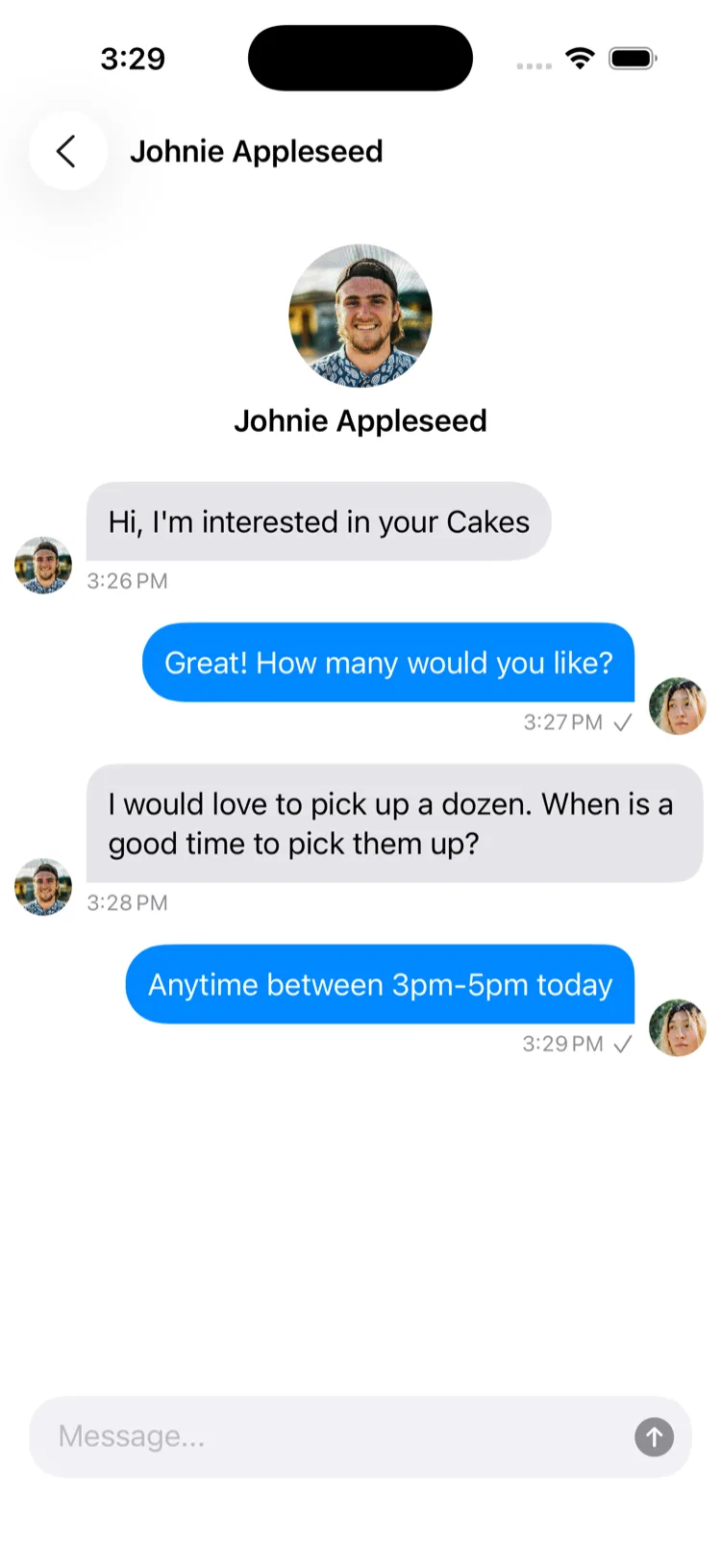
The conversation that starts with one dozen becomes the standing weekly arrangement, all in one thread — who gets which week, the cooler-on-the-porch details, the "hens are molting, back in two weeks" notice. Ratings accumulate and the flock earns a reputation.
A business page when the flock grows
If the waitlist convinces you to add hens, a business page makes the operation a permanent fixture on the map — eggs weekly, seasonal produce alongside, one place buyers check first.
First dozen to first regulars
The compliant version, start to finish:
- Read your state's small-flock egg page: washing, cartons, labels, refrigeration.
- Set up clean collection habits and buy plain new cartons.
- Print labels — name, address, pack date, ungraded designation.
- Price against local farm dozens, with feed costs as your floor.
- List on JustRype and let the chat build your weekly standing orders.
- Keep a waitlist for the molt — it will fill itself.
General information, not legal advice
Egg-sale rules — exemption limits, washing, cartons, labeling and refrigeration — vary by state and change. This guide is general information, not legal or food-safety advice. Verify your requirements with your state agriculture department before selling.
JustRype is a venue that connects neighbors. Buyers and sellers are responsible for complying with the laws that apply to them.
Frequently asked questions
Is it legal to sell eggs from my backyard chickens?
In many US states, yes — small flocks selling directly to consumers are commonly exempt from full commercial egg licensing, with conditions attached. Typical conditions include selling only your own flock's eggs, direct to the end consumer, with clean or new cartons, a label carrying your name and address and the pack date, refrigeration requirements, and sometimes a flock-size cap. The details vary meaningfully by state, so read your state agriculture department's small-flock or egg-sales page before selling.
Do I need to wash eggs before selling them?
It depends on your state's rules, and this is a place to follow them exactly. An unwashed egg keeps its natural protective coating (the cuticle or bloom); washing removes it, which is why washed eggs must be refrigerated. Some states require washing and sanitizing for sale, others permit clean unwashed eggs. Whatever your state requires, the reliable practice is clean nest boxes and daily collection so eggs barely need cleaning at all.
Can I reuse egg cartons when selling eggs?
Many states say no — reused cartons carrying another farm's branding or grading marks are a common violation, and some states require new cartons entirely. Others allow clean reused cartons with the old markings covered or with your own label applied. Plain new cartons are inexpensive in bulk and sidestep the whole question; check your state's rule before building a supply of saved supermarket cartons.
How much should I charge for backyard eggs?
Anchor against what local farms and farm stands charge per dozen in your area — not supermarket prices, which reflect an industrial product. Backyard dozens typically sell at or near local farm-egg prices, and demand usually outruns small-flock supply. Count your feed costs so you know your floor; feed is the reason genuinely cheap backyard eggs are usually a seller subsidizing their hobby.
Do backyard eggs need to be refrigerated?
Washed eggs, always — washing removes the protective cuticle. Unwashed eggs keep longer at room temperature, but many states require refrigeration for any eggs offered for sale regardless. For handoffs, a cooler on the porch or a timed pickup keeps the cold chain intact in warm weather. Whatever your household practice, follow your state's requirement for eggs you sell.