There was a time when selling backyard produce meant a card table, a hand-lettered sign and whoever happened to drive past. The demand side has changed. People actively search for local food now — on neighborhood apps, in local groups, at farmers markets that sell out by ten — and a gardener with surplus is exactly what they are looking for. What has not changed is that most surplus never finds those buyers, because the gardener assumes selling is complicated, or feels awkward charging a neighbor, or simply does not know where the buyers are.
The short version
Fresh, uncut produce you grew yourself is typically the easiest category of food to sell legally — check your state's rules once and you will likely find a clear lane. Sell what you have in genuine surplus, pick it the same day, photograph it in daylight, state the price and pickup plainly, and be reliable. Eggs, honey and anything processed have separate rules. Repeat buyers, not one-off sales, are where backyard selling becomes worthwhile.
Why backyard selling works now
The gap between what a supermarket tomato is and what a backyard tomato is has never been wider. Commercial produce is bred for yield, uniformity and the ability to survive a truck, then picked early enough to survive distribution. A garden tomato is bred for flavor and picked when it is ready. Buyers who have tasted the difference will pay for it, and increasingly they go looking for it.
What they mostly find is farmers markets — one morning a week, often sold out early — and grocery "local" sections of variable honesty. The garden two streets over is invisible to them. That invisibility is the whole problem backyard sellers have, and it is a distribution problem, not a demand problem. Solve the visibility and the surplus moves.
What actually sells
Sell from surplus, not ambition. The first season is not the time to plant for a market; it is the time to sell what your garden already overproduces. Some categories move faster than others.
| Category | Demand | Holds for | Notes |
|---|---|---|---|
| Tomatoes | Highest | Days | The flagship of homegrown flavor; name the variety — it matters to buyers |
| Fresh herbs | Steady | Days | Sell in generous bunches; basil, cilantro and mint outsell store clamshells easily |
| Salad greens | Steady | Hours to a day | Same-day harvest only; the freshness gap over store greens is dramatic |
| Zucchini & summer squash | Seasonal glut | About a week | Everyone has too much at once; price modestly and sell in mixed bags |
| Berries & stone fruit | Very high | Hours to days | Sells same-day almost without effort; handle gently, shallow containers |
| Backyard eggs | Very high, year-round | Weeks refrigerated | Separate rules apply — see the egg-selling guide |
| Honey | High | Indefinite | Its own rules and labeling — see the honey guide |
| Seedlings & starts | High in spring | Weeks | Tomato and pepper starts sell fast; label variety and sowing date |
| Cut flowers | Steady | Days | Dahlias, zinnias and sunflowers by the bunch; underrated seller |
Check your local rules first
Fresh, uncut produce that you grew yourself, sold directly to the person who will eat it, is the most lightly regulated category of home food sales in most of the United States. Many states require nothing at all for it; some ask for a simple registration or restrict certain venues. It is worth fifteen minutes on your state agriculture department's website to know exactly where you stand — search your state's name plus "selling homegrown produce" and read the official page, not a forum thread.
The boundaries matter more than the center. The permissive treatment generally stops the moment you process anything: wash-and-bag salad mixes, cut fruit, pesto from your basil, canned tomatoes and baked goods all move into cottage food territory, with its own requirements. Eggs and honey sit in their own categories nearly everywhere. And selling from a physical stand at your house can trigger zoning or HOA questions that have nothing to do with food law — worth checking if you plan a permanent table.
None of this is a reason not to sell. It is a reason to know which lane you are in before you widen your product range.
Harvesting and presentation
The single biggest advantage you have over every store is time-since-harvest. Protect it. Pick the morning of the sale where the crop allows it, and say so in the listing — "picked this morning" is the most persuasive phrase in local food.
Sort honestly. Every basket has a split tomato and a scarred zucchini; eat those yourself rather than padding a buyer's bag with them. A slightly smaller, honestly graded bag builds the reputation that a padded one spends. Homegrown produce does not need to be uniform — buyers expect character — but it should not include anything you would quietly put back at a market.
Skip washing where storage is better without it. Tomatoes, squash and most fruit only need a wipe; washed greens deteriorate faster than unwashed ones. Herbs are the exception to minimal presentation — bunch them generously with a rubber band and they look like what they are, which is better than anything in a plastic clamshell.
Where to sell: the honest comparison
A backyard seller has four realistic channels, and they are not interchangeable. Effort, reach and fit differ.
| Channel | Effort | Reach | Best for |
|---|---|---|---|
| JustRype listing | Minutes per listing | Neighbors actively browsing for local food, on a map | Surplus as it happens; irregular harvest volumes; building regulars |
| Driveway farm stand | Setup cost, then daily stocking | Drive-by and walk-by traffic only | Steady growers on visible streets — see the farm stand guide |
| Farmers market booth | High: fees, tables, a full morning weekly | Strong, but shared with every other vendor | Volume growers with consistent weekly supply |
| Neighborhood social groups | Low | Hit and miss; posts scroll away, no structure for listings or ratings | One-off glut announcements |
These combine well. Plenty of sellers run a stand for drive-by traffic and list on JustRype so the rest of the neighborhood can find it on the map.
Writing a listing that sells
A good produce listing is specific, honest and boring in the best way. It answers every question a buyer would otherwise have to ask.
Photograph the actual harvest
Natural light, outdoors or by a window, the real items being sold. A phone photo of this morning's tomatoes on the garden table beats any styled image, because the buyer knows exactly what they are getting. Show scale — a hand, a standard basket — and show quantity honestly rather than arranging six tomatoes to look like twelve.
Say what it is, precisely
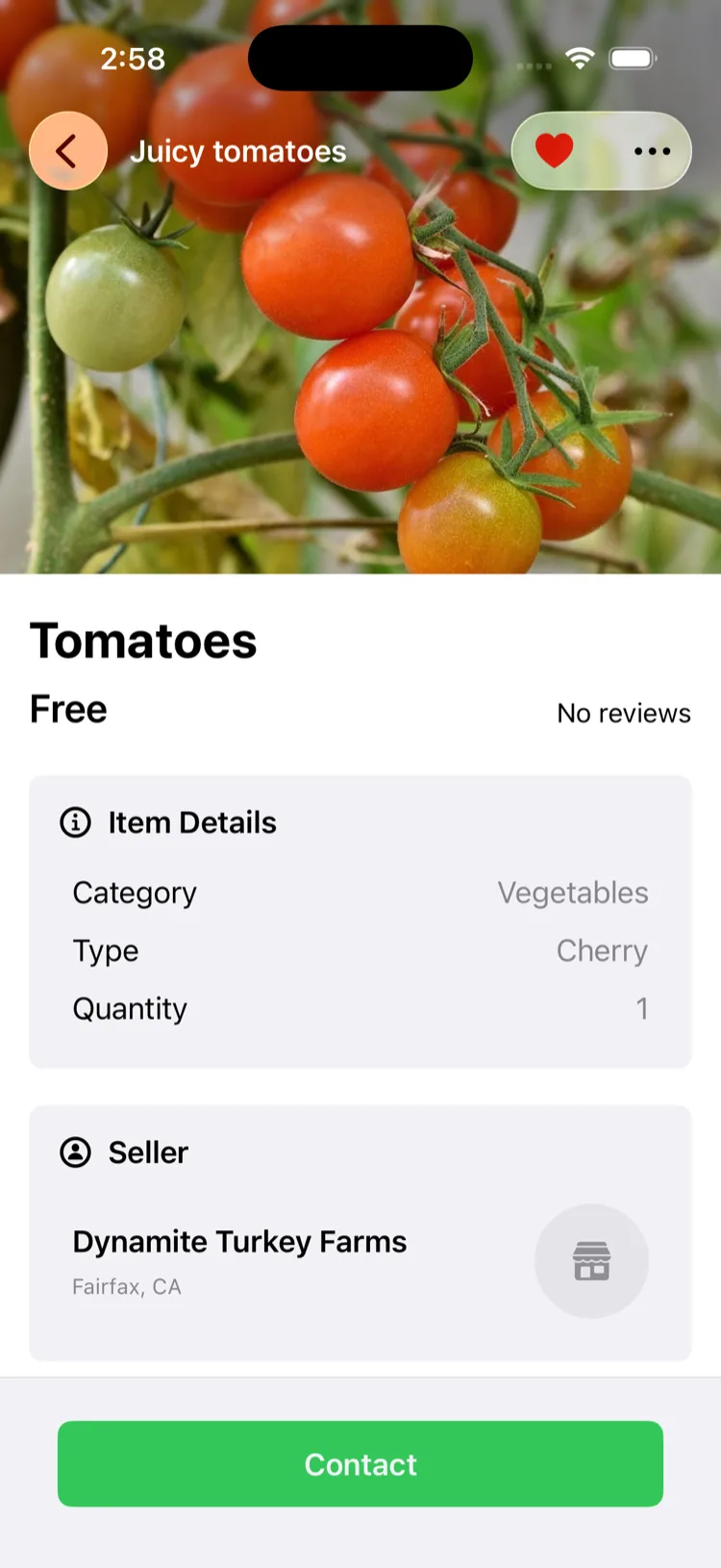
Variety names sell. "Sungold cherry tomatoes, picked this morning, about two pints" does more work than "fresh tomatoes!" ever will. Include the harvest date, the quantity or unit, whether it was grown with or without sprays if you are willing to discuss practices, and anything a cook would want to know.
Price it plainly
State the price on the listing. "Message for price" filters out most real buyers and invites haggling from the rest. Simple units — per bunch, per bag, per pint, per dozen — keep the doorstep exchange easy. The pricing guide covers where to anchor; the short answer is between grocery and farmers-market prices, not below both.
Arranging pickup
JustRype connects you with the buyer; the handoff itself is arranged person to person in chat. Settle three things before anyone travels: when, where, and how they are paying. Porch pickup with a clearly labeled bag suits most produce and most schedules — the buyer collects at their convenience, payment as agreed, nobody waits around. For eggs or anything perishable in summer heat, a cooler on the porch or an agreed handoff time is the considerate version.
Reply quickly while the listing is fresh. Produce buyers decide fast, and the seller who answers in ten minutes gets the sale that the seller who answers tomorrow does not.
Building repeat buyers
The economics of backyard selling are unremarkable per transaction and compelling per relationship. The buyer who takes a bag of greens this week is the same person who wants eggs weekly, tomatoes all summer, and a standing half-dozen of everything you ever list. Regulars remove the selling effort entirely — you message them before the listing goes up.
Reliability builds this faster than quality does. Be there when you said, have what you listed, grade honestly, and the ratings accumulate on their own. As sales become regular, a business page gives the operation a permanent home — a fixture on the neighborhood map rather than a series of listings — which is the point where a garden habit quietly becomes a small farm stand.
How JustRype fits
JustRype exists for exactly this transaction: a neighbor with surplus and a neighbor who wants it, currently invisible to each other. The app is the visibility layer.
Your harvest, on the neighborhood map
Listings appear on a map and in a feed of what is available nearby, which is how buyers who would never drive past your house find you. Someone searching for tomatoes or browsing the neighborhood sees your listing with photos and price, taps in, and messages you directly — no middleman, no fees on the exchange, no algorithm deciding whether your post surfaces.
Chat, ratings and a track record
The conversation stays attached to the listing, so arranging pickup is tidy. Ratings from buyers build a visible reputation, which matters more in local selling than anywhere else — your customers live within walking distance, and trust compounds. Your profile tracks your listings, so regulars can see what you have without asking.
A business page when it gets serious
When surplus selling turns into a rhythm — a weekly egg list, a summer stand, a proper table — a business page takes minutes to create and gives buyers one place to find everything you sell.
Selling your first harvest on JustRype
From garden to first sale in an afternoon:
- Check your state's rules for selling fresh produce — usually a quick read on the agriculture department site.
- Pick this morning's surplus and sort it honestly.
- Photograph it outside in natural light, with something for scale.
- Post the listing: variety, quantity, harvest date, price, pickup arrangements.
- Reply to messages promptly and agree the handoff in chat.
- Deliver what the listing promised, and let the ratings build from there.
General information, not legal advice
Rules for selling food and homemade goods vary widely by state, county and country, and they change. This guide is general information, not legal, tax or food-safety advice. Verify anything that matters with your state agriculture department, local health office or other local authorities before selling.
JustRype is a venue that connects neighbors. Buyers and sellers are responsible for complying with the laws that apply to them.
Frequently asked questions
Do I need a license to sell homegrown vegetables?
In many US states, fresh, uncut produce you grew yourself can be sold direct to consumers with little or no licensing, which makes it the most permissive category of home food sales. But rules vary by state and county, and some places require a simple registration or limit where you can sell. Check your state agriculture department or county health office before you start. Anything processed — baked goods, jams, canned items — falls under separate cottage food rules, and eggs, honey and seafood each have their own requirements.
Can I legally sell produce from my backyard?
Usually yes, for fresh uncut fruit and vegetables you grew yourself, sold directly to the person who will eat them. Most US states treat this as the lightest-touch category of food sales. The common conditions are that you grew it, you sell it direct rather than through a store, and you present it honestly. Local zoning or HOA rules can affect selling from a stand at your home, so check those separately if you plan a permanent setup.
What homegrown produce sells best?
Tomatoes are the reliable headline — homegrown varieties taste unmistakably better than shipped ones, and buyers know it. Beyond that: fresh herbs in bunches, salad greens, zucchini and summer squash in season, berries and stone fruit, backyard eggs, honey, and vegetable seedlings in spring. Anything harvested the same day it is sold has an advantage no store can match. Sell what you genuinely have in surplus rather than trying to grow to demand in your first season.
How should I price homegrown produce?
Anchor between grocery-store and farmers-market prices. Your produce is usually fresher than both, so do not price it as a clearance item — underpricing signals low quality and undercuts other local sellers. Count your real costs, look at what the nearest farmers market charges for the same item, and set a clear price on the listing rather than inviting negotiation. Round units — per bunch, per bag, per dozen — keep pickup simple.
Can I sell eggs or honey alongside my produce?
Often yes, but they are regulated separately from fresh produce almost everywhere. Many states allow small-flock egg sales direct to consumers with conditions on labeling, cartons and refrigeration, and honey frequently has its own exemption or rules covering labeling. Neither is automatically covered by the permissive treatment fresh produce gets, so check each category with your state agriculture department before adding it to your table or listings.