You will notice this guide contains no dollar amounts. That is deliberate. Egg prices in a rural county and a coastal city can differ by a factor of three; tomato prices swing with the season everywhere; and any specific number printed here would be wrong for most readers most of the time. What holds everywhere is the method — where to look for your local numbers and how to position against them. That is worth more than a price list that expires by autumn.
The short version
Price between your grocery store and your farmers market, closer to the market — your product is usually fresher than either. Count real costs (feed, seed, jars, cartons) so you know your floor. Use round units: per bunch, per bag, per dozen. State the price on the listing and skip the haggling. Do not underprice: it signals low quality, attracts the wrong buyers, and undercuts local growers. Adjust seasonally and let sell-out speed tell you when you are low.
The two anchors
Every local food item has two visible reference prices, and together they bracket the honest range.
The grocery store is your floor. Not because your product is comparable — it usually is not — but because no buyer needs convincing that same-week backyard produce beats produce picked before its truck ride. Pricing below the supermarket says something is wrong with yours. The only common exceptions are glut crops in high season, when everyone's zucchini arrives at once and moving volume matters more than margin.
The farmers market is your ceiling — and your closest comparable. Market vendors sell the same fresh, local, direct-from-grower product you do, at prices that generally run above conventional grocery. Walk your nearest market once with your phone out, note the prices for what you grow, and you have real local data. Most backyard sellers land at or slightly under market price: same freshness, less overhead, and pickup two streets away instead of a Saturday-morning trip.
The same bracketing works for every category — the anchors just move. Eggs anchor to farm-stand dozens, honey to raw local honey at market, baked goods to a bakery. Anchor to the nearest genuinely comparable product, never to the industrial version of it.
Count the costs people forget
"It's just surplus, it cost me nothing" is almost never true, and believing it is how sellers end up resenting their own side project. The garden and the coop have real inputs:
- Consumables — seed, seedlings, compost and amendments, chicken feed, canning jars, egg cartons, bags, rubber bands, labels. Feed alone is why "cheap backyard eggs" is usually a fiction; the flock eats whether it lays or not.
- Water — a summer vegetable garden's irrigation shows up on a metered bill.
- Packaging and labels — trivial per unit, real per season, and legally required for some categories.
- Your time — you need not bill the gardening (you would garden anyway), but harvesting, washing, packing, listing and handing off for sales is work done for the buyer. It belongs in the price of anything you sell regularly.
Tally these roughly, per unit sold, and you have your true floor. If the anchored market price does not clear that floor with room to spare, that item is not worth selling — better to know in five minutes of arithmetic than after a season of subsidizing your neighbors' salads.
Why underpricing backfires
Underpricing feels neighborly and works out as anything but.
Price is a quality signal. A buyer who sees eggs at half the going rate does not think "generous neighbor" — they wonder what is wrong with the eggs. Fair pricing puts your product in the mental category it belongs in: better than the store, priced accordingly.
Cheap attracts the wrong buyers. Bargain-hunters churn. The buyers you want — the weekly-dozen, all-summer-tomatoes regulars described in the produce guide — are buying freshness and trust, and they are noticeably insensitive to a fair price. Optimize for them.
It undercuts people who farm for a living. Your hobby surplus competes, at the margin, with the market gardener two miles away whose prices have to carry a mortgage. Selling at a fair local price keeps the whole local food ecosystem healthy; selling at a token price erodes it.
If profit genuinely is not the point for you, the better structure is fair prices plus deliberate generosity — sell at the going rate and give a share to the food bank, the elderly neighbor, the new parents. Generosity as a choice reads completely differently from cheapness as a default.
Units that make selling easy
Weighing produce at a doorstep handoff is friction nobody wants. Sell in visual, countable units at round prices:
- Per bunch — herbs, radishes, carrots, cut flowers, greens tied with a band
- Per bag or basket — salad mix, beans, mixed squash; same-size bags, one price
- Per pint or quart — berries, cherry tomatoes; shallow containers protect the fruit and standardize the unit
- Per piece — melons, large squash, cabbages, seedling pots
- Per dozen — eggs, obviously, and cookies too
- Per jar — honey and preserves, with the weight on the label
Round-number prices remove the change problem entirely. And a stated price on the listing — never "message for price" — filters in decisive buyers and quietly retires the haggling conversation before it starts. The one negotiation worth initiating yourself is the bulk or standing-order discount: a flat of tomatoes for canning, a guaranteed weekly dozen. Those buyers are the backbone of the whole operation and have earned a better rate.
Reading the market and adjusting
Your first price is a hypothesis; the neighborhood grades it fast.
- Selling out within the hour, every time? You are underpriced or under-supplied. Nudge the price up a step — the regulars will not blink.
- Listings lingering for days? Before cutting the price, check the listing quality: dim photos, vague quantities and missing pickup details kill more sales than price does. If the listing is sharp and it still lingers, then adjust.
- Glut season? When every garden on the street has zucchini, either drop toward the floor and move volume, or convert the crop to something differentiated — see the surplus guide for the full decision tree.
- Scarce and early? First tomatoes of the season and the last of the fall eggs carry a premium at every farmers market on earth. Yours can too.
Consistency still beats optimization. Regulars value a stable, fair price they can budget around more than they value catching your discounts — change prices seasonally and deliberately, not weekly.
How JustRype fits
Good pricing depends on information and repeat buyers, and both are things a neighborhood marketplace surfaces naturally.
See your local market before you price
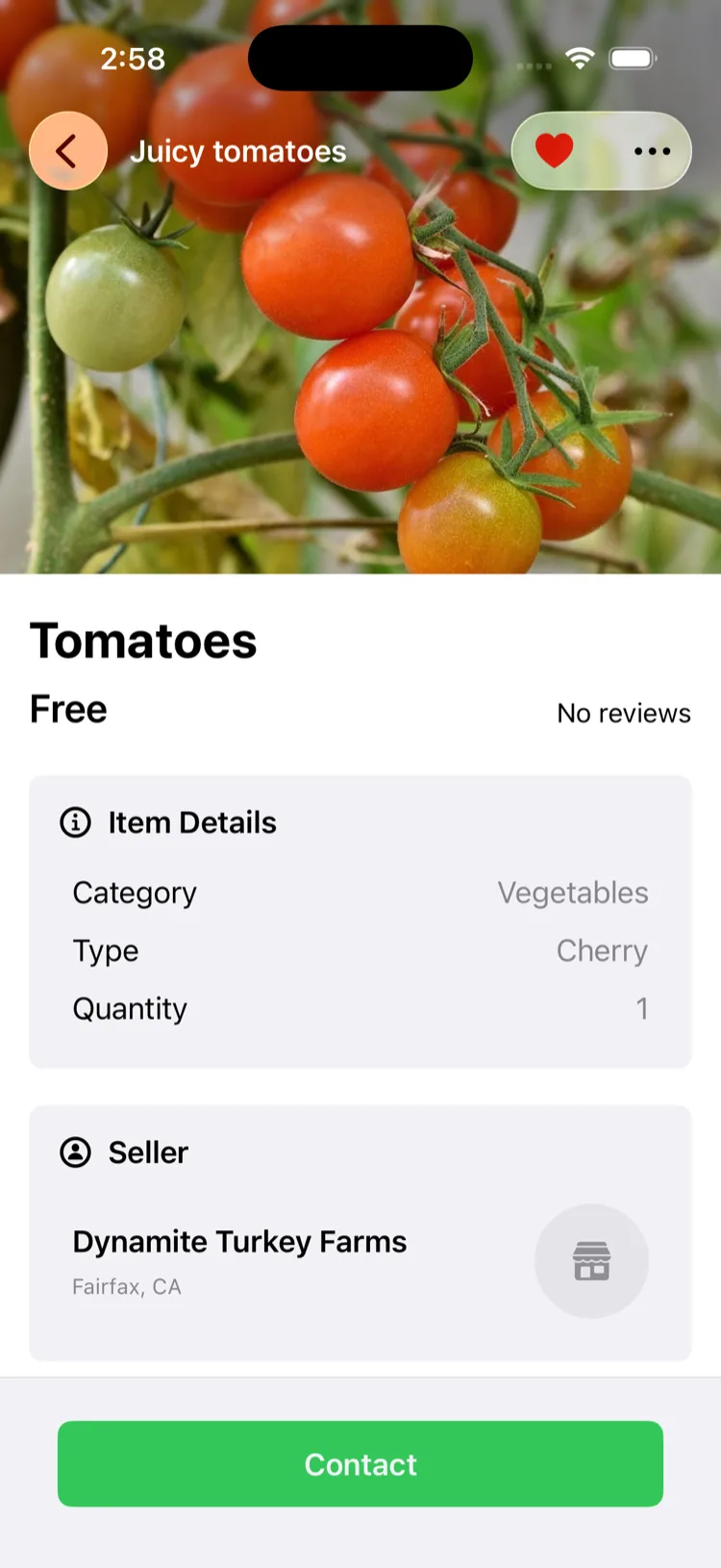
The feed and map show what neighbors are actually charging for eggs, tomatoes and sourdough near you — a third anchor, more local than the farmers market and visible from your couch. Five minutes of browsing beats any national price chart.
Stated prices, clean handoffs
Listings carry the price up front, so the chat is about pickup, not negotiation. Payment is whatever you and the buyer agree person to person; the app takes no cut of the exchange, which keeps small-unit pricing viable.
Regulars, the pricing endgame
Ratings and repeat chats turn one-off sales into standing orders, and standing orders are where fair pricing pays off — a customer who trusts you at a fair price stays for years. A business page formalizes it when your stand or bake day becomes a fixture.
Pricing your next listing
The five-minute version:
- Check the grocery price and the farmers market price for your item.
- Browse JustRype to see what neighbors charge locally.
- Confirm the price clears your real costs with room to spare.
- Pick a round price on a simple unit and state it on the listing.
- Watch how fast it sells, and adjust deliberately next season.
General information, not financial or legal advice
Prices vary widely by region and season, and selling food or homemade goods may carry legal, tax and labeling obligations where you live. This guide is general information. Verify the rules for your product and location with your state and local authorities before selling.
JustRype is a venue that connects neighbors. Buyers and sellers are responsible for complying with the laws that apply to them.
Frequently asked questions
How much should I charge for homegrown vegetables?
Anchor between what your grocery store charges and what the nearest farmers market charges for the same item, usually closer to the market price. Your produce is typically fresher than both, so it does not belong below the grocery price. Check both anchors for your specific area rather than using national figures — local prices vary too much for a universal number to be honest.
Why is underpricing homegrown food a mistake?
Three reasons. Buyers read price as a quality signal, so a suspiciously cheap dozen eggs raises questions instead of orders. Very low prices attract one-off bargain hunters rather than the regulars who make selling worthwhile. And it undercuts every other local seller, including small farms whose livelihoods depend on fair prices. If you would rather not charge much, sell at a fair price and give some away deliberately instead.
Should I let buyers negotiate prices?
State a clear price on the listing and treat it as the price. "Message for price" or "open to offers" filters out decisive buyers and invites haggling from the rest. Local food is not a used-couch market — the amounts are small and the relationship matters more than any single sale. The exception is bulk: a genuine discount for a flat of tomatoes or a standing weekly order is normal and worth offering yourself.
How do farmers market prices compare to grocery stores?
Farmers market prices usually run higher than conventional grocery prices for the same item, though the gap varies by region and crop, and markets are often competitive with grocery organic prices. That premium reflects freshness, variety and direct-from-grower trust — the same things a backyard seller offers. This is why the market, not the supermarket, is the better ceiling anchor for homegrown pricing.
How should I price eggs, honey or baked goods differently from produce?
The anchor changes but the method does not. Eggs anchor against local farm-stand and farmers-market dozens, not supermarket cartons, and feed costs set your floor. Honey anchors against local raw honey at markets, which sells well above supermarket blends. Baked goods anchor against bakery prices, not packaged supermarket goods. In every case: count real costs, find the local direct-sale price for a comparable product, and position near it.