Surplus is not a gardening failure; it is how gardens work. Crops ripen in waves, not on meal plans, and a well-tended plot produces in pulses that no single kitchen absorbs. The failure mode is only ever the default: surplus that sat on the counter until the compost bin became the honest destination. What follows is a way to decide faster than the produce ripens.
The short version
Match the option to the crop and the moment. Sell steady, quality surplus — fresh produce is usually the easiest food category to sell legally. Share overflow and odd amounts; free food makes neighborhood friends fast. Swap with other gardeners whose gluts differ from yours. Preserve what your household will genuinely eat in winter. Donate real volume to a pantry — call ahead. The only wrong answer is deciding late, because delay decides for you.
Why gardens overproduce — and why timing rules everything
Seed packets and seedling trays are sized for optimism. Six zucchini plants went in because they were small in May; by July each one is a factory. Add the wave pattern of ripening — determinate tomatoes finishing at once, a whole bed of lettuce bolting on the same hot week — and surplus is structural, not accidental.
What makes it urgent is the countdown. Salad greens are at their best for a day or two; berries barely longer; tomatoes give you most of a week; squash is forgiving. Each crop's clock sets which options remain open. Same-day greens can be sold or shared but will never make it to a weekend swap; winter squash will patiently wait for any plan at all. Deciding the destination at harvest, not after, is the entire skill.
Option one: sell it
Selling suits surplus that is steady, good-looking and arriving in salable amounts — the weekly overflow of a productive garden rather than one odd cucumber. The practical barrier is lower than most gardeners expect: in most US states, fresh uncut produce you grew yourself can be sold direct to neighbors with little or no licensing. Check your state's rules once — the produce-selling guide covers what to look for — and the lane stays open all season.
Selling has a second-order benefit sharing does not: it builds a roster of neighbors who want your surplus on a schedule. The buyer of this week's greens becomes the standing order that absorbs next month's glut before it exists. Price fairly rather than cheaply — the pricing guide explains why token prices backfire — and let the garden fund its own seed and water.
Option two: share it
Some surplus is not worth monetizing: odd quantities, cosmetically rough fruit, the aftermath of a vacation week. Give it away — deliberately, visibly, before it wilts. A "free cherry tomatoes, porch pickup" listing goes faster than almost anything with a price on it, feeds someone who wanted exactly that, and buys more neighborhood goodwill per pound than any other option on this list.
Sharing is also the on-ramp. The neighbor who took free basil in June is disproportionately likely to become the paying regular of August — they already know your garden, your corner, and that your food is good. Plenty of sellers on JustRype started as sharers who noticed the demand.
Option three: swap it
Two gardens rarely glut on the same thing. You are drowning in tomatoes; the gardener four streets over planted too many cucumbers; a third has eggs and no vegetables at all. Swapping converts your monoculture surplus into a varied harvest with no money involved — the oldest food economy there is, missing only visibility.
You do not need to organize a formal crop swap to get this. A listing that says what you have and what you would happily trade for does the work; so does replying to another grower's listing with an offer. Where a few gardeners in one area start doing this, an informal standing swap tends to assemble itself.
Option four: preserve it
Preserving converts a July glut into a February pantry, and for some crops it is clearly the best answer: tomatoes into frozen sauce, basil into pesto cubes, cucumbers into refrigerator pickles, berries frozen on trays, zucchini shredded for winter baking. Freezing is the low-effort workhorse; water-bath canning suits high-acid crops if you follow tested recipes; low-acid canning requires proper pressure canning and real care — follow current, tested guidance from a source like your state extension service rather than an heirloom recipe card.
Two honest caveats. First, preserve what your household actually eats — a shelf of chutney nobody opens is compost with extra steps. Second, know the legal line if you ever sell: fresh produce is one category, but jams, pickles and sauces are processed foods under cottage food rules, with their own lists and labels. Preserve freely for your own pantry; check the rules before a single jar goes up for sale.
Option five: donate it
When the volume is beyond neighbors and freezer alike — the year every squash plant thrived — food banks and pantries in most areas accept fresh produce gladly, and some communities have gleaning groups that will come pick your fruit trees. Call ahead: pantries have receiving hours and know what they can distribute before it spoils. In the US, Good Samaritan food-donation laws generally protect good-faith donors of wholesome food, though what a given pantry accepts is their call.
Donation pairs naturally with selling rather than competing with it: plenty of growers sell the best of the harvest and standing-order the rest to the pantry, which is a better system than either alone.
Choosing fast: a crop-by-crop cheat sheet
| Surplus situation | Clock | Best first option | Fallback |
|---|---|---|---|
| Salad greens, same-day quality | Hours | Sell or share today | Compost without guilt |
| Tomato peak, weekly volume | Days | Sell; regulars absorb a glut | Sauce and freeze |
| Zucchini avalanche | About a week | Share small ones, sell mixed bags | Shred and freeze; swap |
| Berries and stone fruit | Hours to days | Sell same day — highest demand there is | Freeze on trays |
| Herbs bolting | Days | Bunch and sell or share | Pesto, drying |
| One-off odd amounts | Varies | Share or swap | Kitchen creativity |
| Orchard or squash volume | Weeks | Donate volume, sell the best | Store; swap through winter |
And the quiet sixth option, exercised in winter: plant less of it next year. Two zucchini plants. You know this.
How JustRype fits
Four of the five options — sell, share, swap, and even routing volume to people who want it — are visibility problems, and visibility is the thing JustRype provides.
One listing, whatever the destination
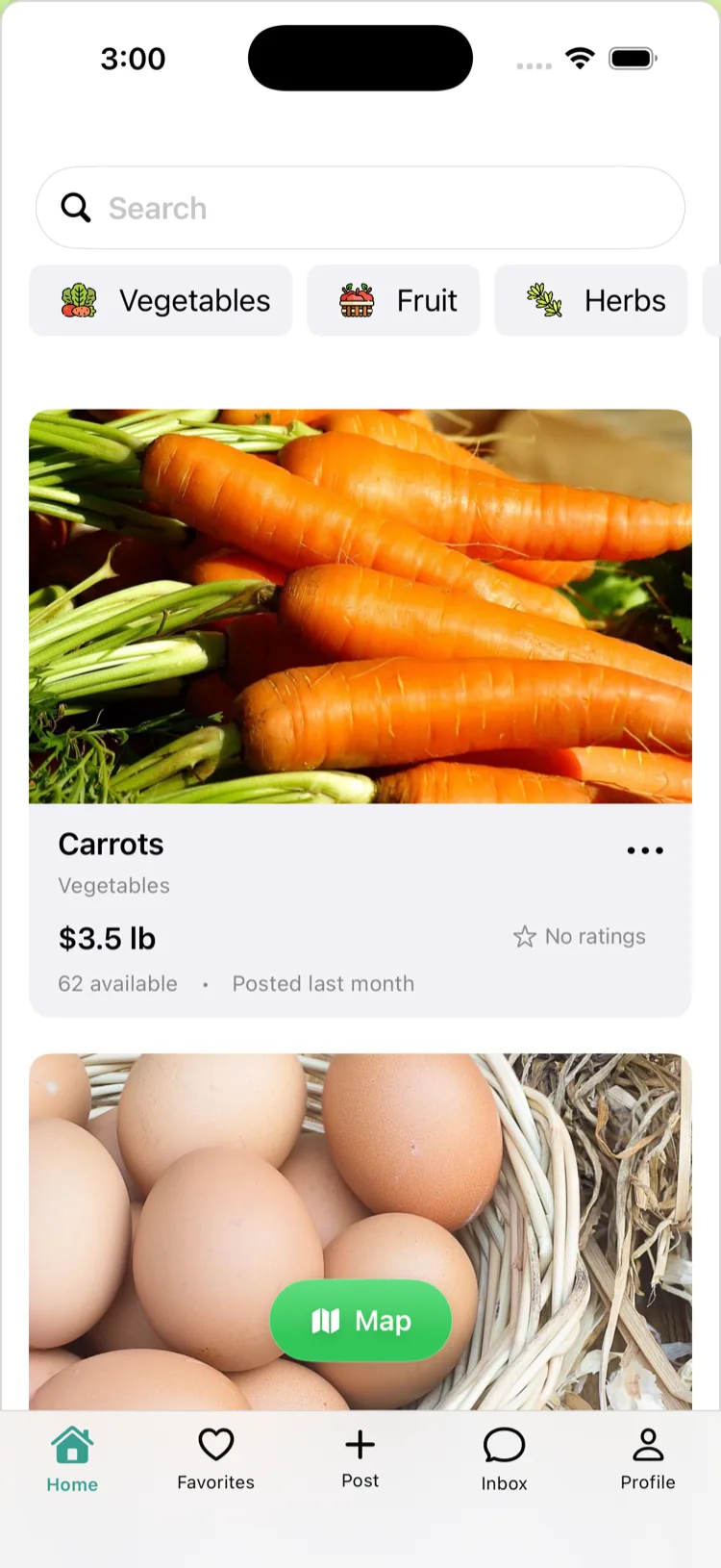
The same few minutes of listing works whether the basket is for sale, free to a good home, or up for trade — photos, a description, and the neighborhood can see it on the map and feed. Surplus moves at the speed of a push notification instead of the speed of running into someone.
Grow, sell, share — the whole cycle
The app is built around exactly this loop: gardens produce, neighbors want, and the exchange happens person to person in chat, with pickup arranged however suits you both. Sellers build ratings and regulars; sharers build the goodwill that becomes regulars later.
See what the neighborhood needs
Browsing nearby listings tells you what is scarce before you decide a surplus's fate — if nobody nearby has eggs or basil this month, that is your answer.
Move this week's surplus
Before it decides for itself:
- Sort the harvest: sellable, shareable, preservable.
- List the sellable portion with photos, price and pickup window.
- List the overflow as free or for trade — it will move fastest.
- Freeze or preserve only what your household will actually eat.
- Call the pantry if real volume remains.
General information, not legal advice
Rules for selling, donating and preserving food vary by state and locality. This guide is general information, not legal or food-safety advice. For selling, check your state agriculture department; for preserving, follow current tested guidance such as your state extension service; for donating, confirm with the receiving organization.
JustRype is a venue that connects neighbors. Buyers and sellers are responsible for complying with the laws that apply to them.
Frequently asked questions
What can I do with too much zucchini?
In rough order of effort: give it away while it is small and good (neighbors say yes to small zucchini and hide from large ones), sell mixed bags cheaply during the glut, swap it with gardeners who overplanted something else, shred and freeze it for winter baking, or compost the overgrown ones without guilt. The real fix is next season: two plants feed most families with plenty to spare.
Can I sell my extra garden produce?
In most US states, fresh uncut produce you grew yourself can be sold direct to neighbors with little or no licensing, making selling a realistic option even for occasional surplus. Check your state agriculture department's rules once, then list surplus as it happens. Anything processed — jams, sauces, baked goods — falls under separate cottage food rules.
Where can I donate extra garden produce?
Food banks and pantries in most areas accept fresh produce, and some communities have gleaning groups or crop-sharing programs that collect garden surplus. Call ahead — pantries have delivery windows and can tell you what they can use. In the US, Good Samaritan food-donation laws generally protect good-faith donors of wholesome food, but confirm what your local pantry accepts.
Is it better to sell or give away surplus produce?
They solve different problems, and most gardeners end up doing both. Selling suits steady, quality surplus — it funds the garden and builds regulars who want your food weekly. Sharing suits overflow moments, odd quantities, and neighborhood goodwill; a free tomato listing makes friends fast. Deciding deliberately per harvest beats defaulting to compost, which is where unplanned surplus actually goes.
What is a produce swap and how do I start one?
A produce swap is gardeners trading surplus directly — your tomatoes for their cucumbers, eggs for herbs, seedlings for jam. No money, everyone eats better. Starting one takes little more than visibility: post what you have and what you are hoping to trade, and see who nearby responds. On JustRype, listings marked for sharing or trading do this without organizing a formal event.