The food two streets away has advantages nothing trucked to a store can match: it was picked today, it never sat in cold storage, and the person selling it can answer any question about it because they grew it. What the neighborhood layer asks in exchange is a little more participation than a checkout lane — a message, a short walk, a conversation. That participation is the entire skill this guide teaches, and it is not much of one.
The short version
Find sellers on the neighborhood map, ask three questions — when was it picked, how was it grown or made, how do I store it — and arrange a specific pickup window in chat. Show up on time with a bag and small bills, pay the asked price without haggling, and go where directed. Do that twice and you stop being a buyer and become a regular, which is where the best of this — first pick, saved dozens, harvest-day messages — actually lives.
Finding sellers near you
Neighborhood sellers have always been findable only by accident — a curbside sign, a coworker's mention, a lucky walk. The full landscape of local channels is mapped in the finding local produce guide; the short version is that markets and farm stands announce themselves, while the backyard layer — the most local layer of all — historically did not.
That is the gap neighborhood marketplace apps close. On JustRype, nearby growers, bakers, egg-keepers and beekeepers list what they have on a map, with photos and prices, so discovering them is a browse rather than luck. Whatever channel you use, the buying skills below are the same.
What to ask, by category
Three questions serve for almost everything: when was it picked (or laid, or baked), how was it grown or made, and how should I store it. Sellers who grow their own food love these questions — you are asking about their favorite subject. A few category specifics:
- Produce — ask about picking day and spray practices. Expect honest cosmetic imperfection; backyard fruit looks like fruit, not catalog photos, and eats better than it looks.
- Eggs — ask whether they're washed or unwashed, because that determines storage: washed eggs go in the fridge, unwashed eggs keep longer and may sit at room temperature. A good egg seller tells you before you ask.
- Honey — ask when it was extracted and whether it's raw. Crystallized honey is natural and fine — gentle warming re-liquefies it.
- Baked goods and preserves — ask about ingredients and allergens, always, and expect a home-production label where state rules require one. The background is in the cottage food guide.
The universal signal, in every category, is how questions land. Sellers proud of their product answer easily and specifically. Vagueness about basics is your cue to pass — one of the quiet strengths of buying face-to-face is that you can.
Pickup and payment, gracefully
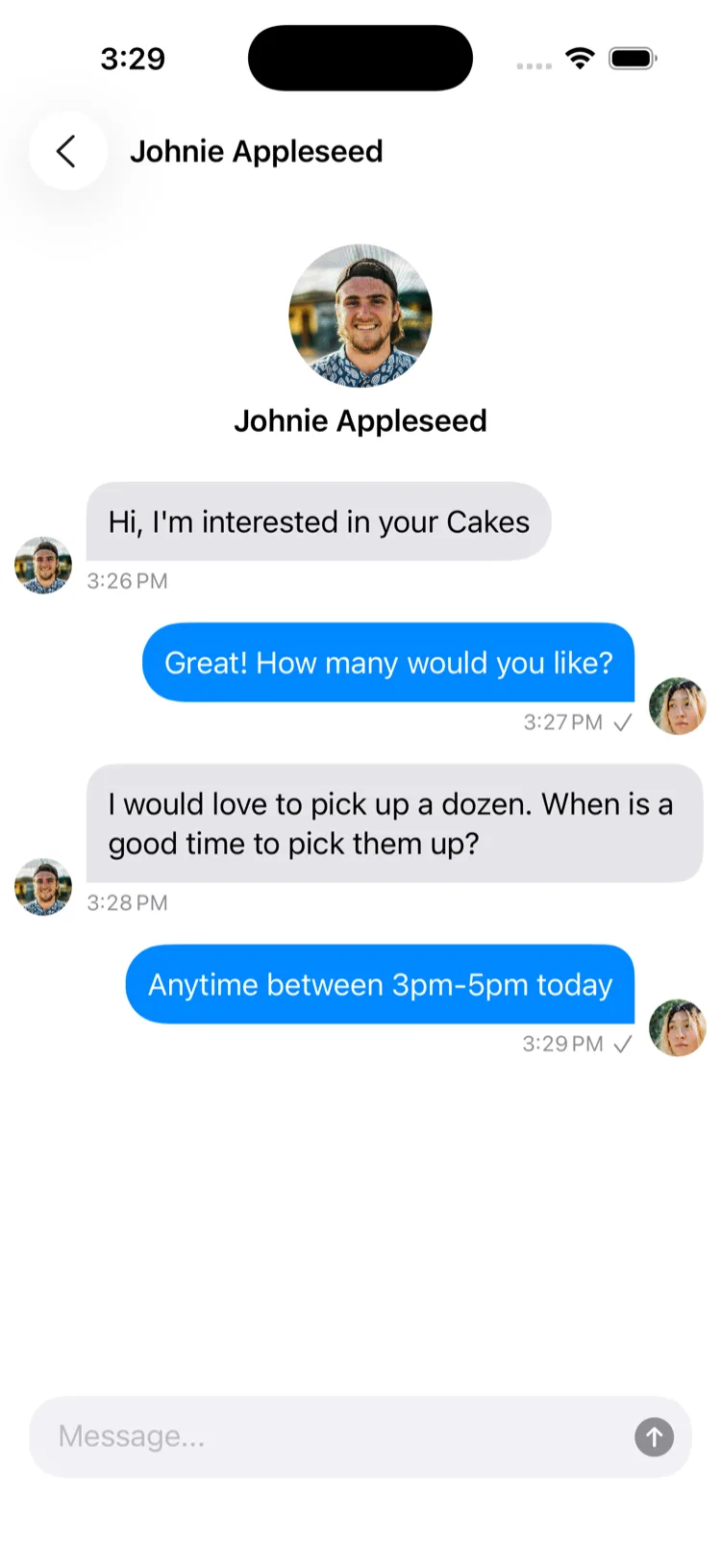
Almost every neighborhood purchase resolves to the same shape: agree in chat on item, price, payment method and a pickup window, then show up. The habits that make it smooth:
- Be specific and be punctual. "Between 5 and 5:30" beats "sometime after work," and food picked for you deserves your arrival. Running late? Message.
- Go where directed. Porch table, driveway shelf, side gate — sellers say where; that is the boundary of the visit. Don't wander toward the garden uninvited (though many sellers will happily invite you).
- Bring your own kit. A bag always; a cooler for eggs or anything chilled; small bills or the payment app agreed in chat. At an honor stand, exact-ish change and rounding up beat leaving an IOU.
- Pay the price, don't haggle. Neighborhood prices already undercut the market stall, and the person on the other side is a neighbor, not a vendor at a bazaar. If the price feels high, simply don't buy — and know that most are set fairly, as the pricing guide shows from the seller's side.
- Cancel like an adult. Plans change; a timely message keeps you welcome. A silent no-show ends the relationship before it starts.
Becoming a regular
The real prize of neighborhood buying is not any single purchase — it is standing. Small sellers run on predictability: the buyer who takes a dozen eggs every Friday or claims a honey jar each extraction is worth more to them than a parade of one-timers, and sellers treat regulars accordingly. First pick of the harvest. A saved dozen when supply is short. A message when the good tomatoes come in.
Getting there takes nothing clever: buy again, be easy to deal with, say when something was great, and tell them what you'd buy more of. A seller deciding what to plant next spring listens hardest to regulars. Over a season or two the arrangement stops feeling like shopping at all — it becomes the modern version of a very old neighborhood pattern, which is exactly what it is.
How JustRype fits
JustRype packages this entire guide into an app: discovery, questions, arrangement and the regular relationship, all in one place.
The map is the discovery
Browse listings near you — what's ripe, what it costs, how far the walk is. The invisible layer of backyard sellers becomes a visible one.
Chat is the arrangement
Every question in this guide — picked when, grown how, pickup when — happens in listing chat, so the details are agreed and written down before you set out.
Regulars are built in
Follow the sellers you like and watch for their new listings. The Friday-egg arrangement starts as a chat message and becomes a rhythm.
Your first neighborhood purchase
Start to finish:
- Browse the map and pick something in season nearby.
- Ask: picked when, grown how, store how.
- Agree price, payment method and a specific pickup window.
- Show up on time with a bag and small bills.
- Liked it? Say so, and buy again next week.
Frequently asked questions
Is it safe to buy food from neighbors?
Generally yes, with the same judgment you'd apply anywhere. Fresh produce from a backyard garden is as low-risk as food gets, and you can see the garden it came from. For eggs, honey and home-baked goods, most states have specific small-scale sales rules, and a good seller can tell you plainly how they handle their product. Ask how it was grown or made, look at how it's presented, and skip any seller who is cagey about basic questions — the transparency of buying face-to-face is itself the safety mechanism supermarkets can't offer.
What should I ask before buying?
Three questions cover most purchases: When was it picked (or laid, or baked)? How was it grown or made — any sprays, and for baked goods, what are the ingredients or allergens? And how should I store it? Sellers who grow their own food answer these easily and usually enthusiastically. For anything with allergen stakes, ask specifically; home-kitchen labeling rules exist, but a direct conversation is more reliable than any label.
How does payment usually work?
Small sellers typically take cash and common payment apps; honor stands often run on a cash box or a posted payment code. Bring small bills, pay the asked price without haggling — neighborhood prices are already fair, and the seller is not a flea market — and round up rather than down when exact change fails. Confirm the payment method in chat before walking over.
What's the etiquette for pickup at someone's home?
Arrive in the agreed window, message if you're running late, and go where directed — porch table, driveway, side gate — rather than wandering the property. Bring your own bag and, for anything chilled, a cooler. Keep it brief unless the seller wants to chat (many do — the tour of the garden is half the fun). If plans change, cancel with notice; a no-show on food picked for you is the fastest way off a seller's list.
Why buy from neighbors instead of the farmers market?
Not instead — as well. The neighborhood layer is fresher (often picked the same day, sometimes the same hour), usually cheaper (no stall fees or drive built into the price), and available all week rather than one market morning. What it lacks is one-stop variety. Most local-food buyers use both: markets for range, neighbors for the everyday staples that grow three streets away.