Somewhere near you, almost certainly, an egg stand with an honor box has been quietly selling out for years. Farm stands persist because they solve the seller's real constraint — time — better than any other channel: the stand sells while you are at work, asleep, or in the garden. What has changed is the discovery problem. A stand used to live or die on drive-by traffic; now the neighborhood map can do the advertising, which makes stands viable on quiet streets that could never have supported one before.
The short version
Check two rulebooks before you build: your state's food rules (fresh produce is usually easy; eggs, honey and baked goods have their own lanes) and your local zoning or HOA rules for operating a stand at your address. Prove demand with a folding table on harvest days, then graduate to a sheltered honor stand with a locked cash box and a digital payment option. Stock small and fresh, price in round numbers, and put the stand on the map — discovery, not honesty, is what limits most honor stands.
Two rulebooks to check first
A farm stand sits at the intersection of two unrelated bodies of law, and conflating them is the classic beginner confusion.
Food rules govern what you sell. Fresh, uncut produce you grew yourself is typically the most permissive category in the US — many states ask nothing at all for direct-to-consumer sales. Eggs usually carry small-flock conditions (cartons, labeling, refrigeration), honey often has its own labeling rules, and baked goods fall under your state's cottage food law, which sometimes also restricts where they may be sold. The category-by-category detail lives in the other guides; the point here is that "produce stand" and "produce, eggs, honey and muffins stand" are different compliance pictures.
Land-use rules govern where you sell. Whether a stand may operate at your address is a zoning question — city or county — plus an HOA question if you have one. Many jurisdictions explicitly allow modest residential produce stands; others want a home-occupation permit; a few prohibit street-facing sales entirely. Sightlines at corners, parking, and signage size are the usual friction points. One call or email to your local planning office settles it, and doing so before a neighbor complains is dramatically better than after.
Start with a table, not a build
The tempting first step is a weekend building a beautiful stand. The correct first step is a folding table on your next three or four harvest days. It costs nothing and answers the questions that determine everything else: Does your street get enough traffic, at what hours? What sells out and what sits? Do buyers come from walking past, or because you posted?
Run the table attended a few times — you will meet the people who become your regulars, and the conversations tell you what the neighborhood actually wants (the answer is very often "eggs" and "whatever tomatoes those are"). If the table keeps selling out, you have earned the build. If it does not, you have saved a weekend and learned that your future is probably listing-based selling rather than a fixed stand — an equally good outcome, discovered cheaply.
Attended table or honor stand?
| Format | Your time | Works best when | Watch out for |
|---|---|---|---|
| Attended table | Hours per session | Busy streets, social sellers, big harvest days | Your whole morning, every time |
| Honor stand | Minutes to restock | Quiet streets, steady supply, working sellers | Small losses; weather; stale stock if unmonitored |
| Hybrid | Low, flexible | Honor box weekdays, attended on peak mornings | Needs clear signage about when someone is around |
Most home stands converge on the hybrid: an honor box that runs itself, with attended hours when the harvest is big or the mood strikes. On the honesty question — the one everyone asks — the long experience of honor stands is reassuring. The overwhelming majority of people pay. Losses are real but small, and they are the cost of a store with no staff; most operators find them far cheaper than the alternative, which is their own time. A locked cash box bolted to the stand, modest stock levels, and the fact that your customers live nearby keep the honest system honest.
The setup that works
Stand engineering is three problems: sun, weather and visibility.
- Shade is non-negotiable. Two hours of direct sun turns a display of greens into a cautionary tale. North-facing placement, a market umbrella, or a roofed box — pick one before the first stocking.
- Shelter the stock. A simple roofed cabinet or covered shelving keeps rain off and lets the stand run in marginal weather. Coolers with ice packs extend what you can safely offer — for eggs where refrigeration is required, a cooler is often the difference between compliant and not.
- Signage does the selling. A big, legible name and price list readable from a moving car; smaller labels at the shelf. Include payment instructions and, if you restock on a schedule, say the schedule — "eggs Fridays" trains the whole street.
- Payment, both kinds. A secured cash box plus a sign with your payment-app details. Round prices. Empty the box daily.
- The stand itself can be humble. A repurposed bookshelf under an eave has launched a thousand egg stands. Spend on shade and signage before carpentry.
Stocking and pricing
The counterintuitive rule of small stands: less stock, more often. A stand holding this morning's six best items looks alive; a stand holding three days of accumulating produce looks like a liability. Small displays also sell out, and selling out — announced and repeated — is the best marketing a stand has.
Anchor the lineup with whatever you produce most reliably (eggs and cut flowers are the classic honor-stand anchors; tomatoes carry summer) and rotate the garden's pulses through the remaining shelf space. Price in round numbers against your local farmers-market anchor — the full method is in the pricing guide — and label everything clearly enough that no buyer has to guess. Pull tired stock ruthlessly; one bad bag costs more reputation than its price.
Getting discovered
Here is the honest arithmetic of a residential stand: the number of people who drive down your street is fixed and small. Signage converts some of them, word of mouth compounds slowly, and that is the whole traditional growth curve — years to become a fixture.
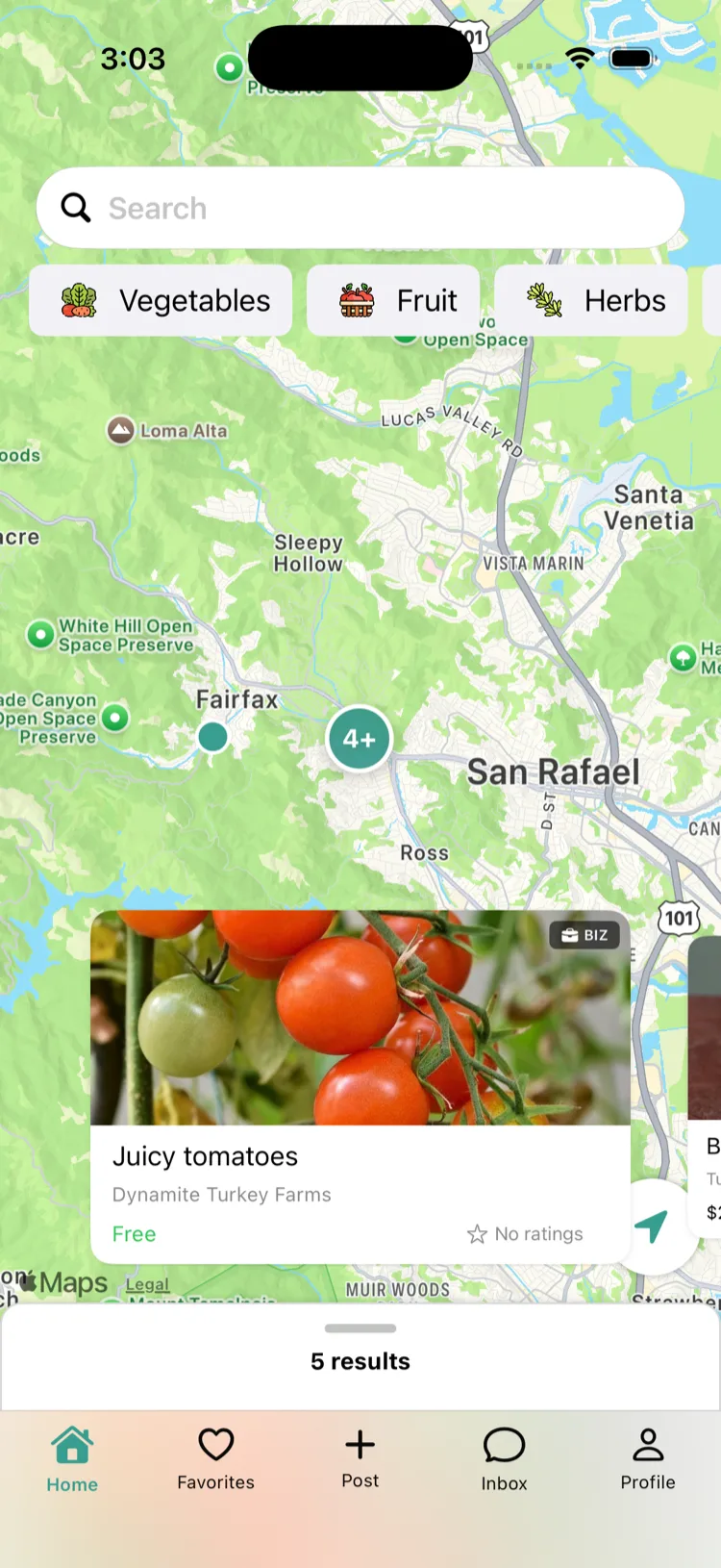
The shortcut is making the stand visible to people who will never drive past it. A stand pinned on the neighborhood map, with restock announcements, reaches every nearby household actively looking for local food — which is exactly the population an honor stand needs. "Restocked: eggs, Sungolds, dahlias" posted at 8am does more for the day's sales than the best roadside sign, because it reaches buyers three streets over who now make the trip on purpose.
How JustRype fits
JustRype turns a stand's biggest weakness — fixed location, drive-by-only discovery — into a solved problem.
A pin on the neighborhood map
A business page puts your stand on the map permanently: name, photos, what you sell, when you restock. Anyone browsing for local food nearby finds the stand whether or not they have ever been down your street. For an honor stand, this is the difference between serving one block and serving a neighborhood.
Restock announcements to people who care
Listings announce what just hit the shelf. The neighbors who want eggs learn to watch for your Friday post; the summer tomato listing brings buyers the same morning. Chat handles the questions ("any dozens left?") without you standing at the stand.
Ratings that compound into a fixture
Every good exchange builds visible reputation. A stand with a track record stops being an experiment and becomes infrastructure — the place the neighborhood just knows to go.
From table to fixture
The whole path:
- Check state food rules for what you plan to sell, and zoning or HOA rules for your address.
- Run a folding table on three or four harvest days to prove demand.
- Build the minimum: shade, shelter, big signage, locked cash box, digital payment sign.
- Stock small and fresh; price in round numbers; pull anything tired.
- Create a business page so the stand lives on the neighborhood map.
- Announce restocks and let the regulars build the rest.
General information, not legal advice
Food-sale rules, zoning, signage and permit requirements vary by state, county, city and HOA, and they change. This guide is general information, not legal advice. Verify your situation with your state agriculture department and local planning office before operating a stand.
JustRype is a venue that connects neighbors. Buyers and sellers are responsible for complying with the laws that apply to them.
Frequently asked questions
Do I need a permit to have a farm stand at my house?
It depends on two separate sets of rules. Food rules: in most US states, selling fresh uncut produce you grew yourself requires little or no food licensing. Land-use rules: whether you can operate a stand at your address is a zoning question decided by your city or county, and sometimes an HOA. Many places explicitly allow small residential produce stands, some require a home-occupation or temporary-use permit, and a few restrict them. Check both before building anything permanent.
Do honor-system farm stands actually work?
Generally yes, and they have worked for generations in rural areas. Most stand operators report that the overwhelming majority of visitors pay honestly, and small losses are usually cheaper than the time cost of attending a table all day. Losses drop further with a secured cash box, digital payment options, modest stock levels, and the simple fact of being on a residential street where buyers are neighbors rather than strangers.
What sells best at a small farm stand?
The same things that dominate local food demand everywhere: tomatoes in season, eggs year-round if your flock and your state's rules allow, berries and stone fruit, cut flowers, herbs, and whatever your garden produces in reliable weekly volume. Eggs and flowers are the classic honor-stand anchors because demand is steady and the product handles a few hours on a shaded shelf.
How should customers pay at an unattended stand?
Offer both cash and a digital option. A locked, fixed cash box takes bills and coins; a small sign with your payment-app details covers the many buyers who carry no cash. Round prices make the math easy in both directions. Empty the cash box on a schedule rather than letting it accumulate.
Can I sell eggs, honey or baked goods at my farm stand?
Often, but each category has its own rules separate from fresh produce. Eggs typically involve small-flock requirements around cartons, labeling and refrigeration; honey usually has its own labeling rules; baked goods fall under your state's cottage food law, which may also dictate where they can be sold. All three are common and popular at stands — just verify each category with your state before adding it to the shelf.