Car camping is the version of camping where you drive to the site, park next to your tent, and unload everything you could not possibly carry on your back. Weight is not the constraint — volume and organisation are. This checklist is structured by category for a two-night weekend trip, which is the most common format and serves as the baseline for shorter or longer trips.
The short version
Shelter, sleep gear, kitchen, cooler, food, chairs, table, lantern, layers, rain gear, headlamps, first aid, toiletries, trash bags, firewood and cash. Use bins. Check the forgotten-item list below before you leave.
Shelter and sleep
Car camping tents are larger, heavier and more comfortable than backpacking tents. You are not carrying it, so choose for livable space rather than pack weight.
| Item | Notes |
|---|---|
| Tent (sized for your group plus margin) | A 4-person tent for 3 people is more comfortable than a 3-person tent for 3 people. |
| Tent stakes (extras beyond what came with the tent) | You will lose or bend stakes. Bring four to six extras. |
| Guylines or extra cord | For tying down the rainfly in wind or adding a ridgeline inside the tent. |
| Footprint or tarp (under the tent) | Protects the tent floor from abrasion and moisture; extends tent life significantly. |
| Sleeping bag or blankets and bedding | Many people bring actual bedding (sheets, duvet) for car camping. Check the overnight low temperature. |
| Sleeping pad or air mattress | Air mattresses are heavy but comfortable. Bring a pump or plan to inflate manually. |
| Pillow | Real pillows, not stuff sacks. Comfort is allowed. |
Kitchen and cooking
The car camping kitchen can be as elaborate as you want. Most people bring a two-burner stove or use the campground grill if fires are allowed.
| Item | Notes |
|---|---|
| Camp stove (two-burner propane stove is standard) | Or a portable grill. Check if the campground allows open flames or charcoal. |
| Fuel (propane canisters or charcoal) | Bring one extra canister. Running out of fuel mid-trip is common. |
| Lighter or matches (waterproof) | Keep multiple lighters in different places. You will lose one. |
| Cookware (pots, pans, skillet) | A large pot for boiling water and a skillet for eggs and bacon covers most meals. |
| Cooking utensils (spatula, tongs, large spoon) | Metal or heat-resistant plastic. |
| Cutting board and knife | A dedicated camp cutting board avoids cross-contamination. |
| Plates, bowls, mugs | Reusable enamel or plastic. One set per person, plus one spare. |
| Forks, spoons, knives (utensils) | Real metal utensils are better than disposable; bring extras. |
| Cooler with ice or ice packs | Pre-chill the cooler the night before. Block ice lasts longer than cubed ice. |
| Water containers (5–10 litre jugs) | For drinking and cooking. Many campgrounds have potable water, but not all sites have taps nearby. |
| Dish tub or basin | For washing dishes. Often forgotten, always missed. |
| Biodegradable dish soap and sponge | Small bottle; a little goes a long way. |
| Dish towels or drying rack | Two towels: one for drying, one for hands. |
| Trash bags (heavy-duty) | At least three: one for trash, one for recycling if available, one spare. |
| Aluminium foil and resealable bags | For wrapping food, storing leftovers, or cooking over coals. |
| Paper towels or cloth napkins | Two rolls for a weekend trip. |
| Can opener and bottle opener | If your multi-tool has these, you are covered. Otherwise, bring dedicated ones. |
Food and drink
Plan meals by day: breakfast, lunch, dinner, snacks. Pre-prep at home as much as possible — chop vegetables, marinate meat, portion snacks into bags. The less cooking and prep you do at camp, the more time you have to enjoy camp.
| Category | What to bring |
|---|---|
| Breakfast | Eggs, bacon, sausages, bread for toast, oatmeal, cereal, milk, fruit. |
| Lunch | Sandwich ingredients, wraps, cheese, deli meat, peanut butter, jam, chips, vegetables. |
| Dinner | Pre-marinated meat, pasta, rice, canned beans, vegetables, sauces. One-pot meals work best. |
| Snacks | Trail mix, granola bars, crackers, cheese, fruit, jerky, chocolate. |
| Drinks | Water (at least 2 litres per person per day), coffee, tea, beer, wine, juice. |
| Condiments and spices | Salt, pepper, oil, butter, ketchup, mustard, hot sauce. Small containers. |
| Coffee and tea setup | Ground coffee, filters (often forgotten!), french press or pour-over, tea bags, sugar, creamer. |
For a group trip, see the group camping trip planning guide for how to divide meal responsibilities and avoid everyone bringing the same thing.
Camp comfort and furniture
This is the category that separates car camping from backpacking. You have the space, so use it.
| Item | Notes |
|---|---|
| Camp chairs (one per person minimum) | Folding chairs with cup holders. These are always forgotten and always regretted. |
| Camp table | Folding table for food prep and eating. A stable surface makes camp life better. |
| Tarp or canopy (for shade or rain cover) | Set this up over the table and cooking area. Essential in sun or rain. |
| Rope or paracord (for hanging tarp, drying clothes) | 15–20 metres is sufficient. |
| Doormat or small rug (for tent entrance) | Keeps dirt and debris out of the tent. |
| Hammock | Optional but popular for lounging between trees. |
Clothing and layers
Weather changes, especially at night. Bring layers so you can adjust rather than suffer.
| Item | Notes |
|---|---|
| Base layers (moisture-wicking shirt and pants) | Synthetic or merino wool, not cotton. Cotton stays wet. |
| Mid layers (fleece or insulated jacket) | For cool mornings and evenings around the fire. |
| Outer shell (rain jacket) | Waterproof and windproof. Check the forecast, but bring it anyway. |
| Warm jacket or puffy | For sitting around camp after dark. Nights are colder than you think. |
| Pants (hiking pants or jeans) | At least two pairs. One will get muddy or wet. |
| Shorts | For warm days and camp lounging. |
| Underwear and socks (extras) | One set per day, plus two extra pairs of socks. Wet socks are miserable. |
| Sun hat or cap | Wide brim for sun protection. |
| Warm hat or beanie | You lose significant heat through your head. Bring this even in summer. |
| Gloves | Light gloves for cool mornings. |
| Hiking boots or shoes | Broken in, not new. Bring camp shoes (sandals or slip-ons) for around the site. |
Lighting and power
Campgrounds do not have streetlights. Once the sun sets, you need your own lighting.
| Item | Notes |
|---|---|
| Headlamp (one per person) | Keeps your hands free. Essential for night-time bathroom trips. |
| Extra batteries for headlamps | Commonly forgotten. Check battery level before you leave. |
| Lantern (battery or rechargeable) | For lighting the tent interior and the campsite. LED lanterns are efficient and bright. |
| String lights or fairy lights (optional) | For ambiance. Battery-powered or solar. |
| Phone charger or battery bank | Even if you have no signal, your phone is your camera, map and flashlight. |
| Solar panel (for trips longer than two nights) | Optional but useful for keeping devices charged without the car. |
Hygiene and bathroom
Most campgrounds have toilets and running water, but not all sites are close to the facilities.
| Item | Notes |
|---|---|
| Toilet paper (full roll, not partial) | Campground bathrooms may be out of stock or far from your site. |
| Hand sanitiser | Large bottle. Use it often. |
| Biodegradable soap (for body and dishes) | All-in-one camp soap. Dr. Bronner's is a common choice. |
| Toothbrush and toothpaste | Travel-sized works fine. |
| Towel (quick-dry camping towel) | Microfiber towels pack small and dry fast. |
| Sunscreen (SPF 30 or higher) | Often forgotten. Apply in the morning and reapply after swimming or sweating. |
| Bug spray or insect repellent | DEET-based works best in high-bug areas. Consider a permethrin spray for clothing. |
| Lip balm with SPF | Lips burn easily and heal slowly. |
| Personal medications | Prescription meds, allergy pills, pain relief. |
| Feminine hygiene products (if applicable) | Pack extras; disposal at camp can be difficult. |
Safety and first aid
A first aid kit is non-negotiable. Most camping injuries are minor — cuts, blisters, burns, sprains — but they are miserable without supplies.
| Item | Notes |
|---|---|
| First aid kit (comprehensive, not minimal) | Bandages, gauze, medical tape, antiseptic wipes, tweezers, scissors, blister treatment. |
| Pain relievers (ibuprofen, acetaminophen) | For headaches, muscle soreness, minor injuries. |
| Antihistamine (for allergic reactions or bug bites) | Benadryl or similar. |
| Burn cream or aloe vera gel | For cooking burns or sunburn. |
| Emergency contact list and medical information | On paper, in a waterproof bag. Include known allergies. |
| Whistle | For signalling in an emergency. Three blasts is the universal distress signal. |
| Map of the campground and surrounding area | Paper map or downloaded offline map. Do not rely on signal. |
| Fire extinguisher (small camp-size) | Optional but wise if you are cooking with propane or having a campfire. |
For longer trips or trips in remote areas, review the hiking trip plan and safety guide for how to file a trip plan with someone at home.
Tools and repair
Things break. Being able to fix them at camp instead of driving an hour to a hardware store is worth the small amount of space these take.
| Item | Notes |
|---|---|
| Multi-tool or knife | Pliers, knife blade, screwdrivers. Leatherman or similar. |
| Duct tape (small roll or wrapped around a trekking pole) | Fixes torn tents, broken poles, leaking water containers, everything. |
| Repair kit for tent and sleeping pad | Patch kits usually come with gear; keep them together in one bag. |
| Zip ties and bungee cords | For securing tarps, fixing broken buckles, improvising repairs. |
| Small hammer or mallet | For pounding in tent stakes, especially in hard ground. |
| Saw or hatchet (if firewood collection is allowed) | Check campground rules. Many prohibit cutting live wood. |
Entertainment
Depending on your group, camp time is social time. Bring things to do when you are not hiking or cooking.
| Item | Notes |
|---|---|
| Playing cards or board games | Compact travel versions work well. |
| Books or e-reader | Downtime reading is one of camping's best features. |
| Bluetooth speaker (optional) | Keep volume low; other campers did not come for your playlist. |
| Binoculars (for bird watching or stargazing) | Especially good for kids. |
| Frisbee, football, or other outdoor games | If you have open space near the site. |
Dog and kids extras
If you are camping with dogs or children, add these to the list.
For dogs
- Leash and tie-out cable (check campground leash rules).
- Dog food, water bowl, collapsible travel bowl.
- Dog bed or blanket for the tent.
- Waste bags for cleaning up after the dog.
- Dog first aid kit (tick remover, paw balm, bandages).
For kids
- Extra clothing (kids get dirtier faster).
- Snacks beyond the meal plan (hungry kids do not camp well).
- Toys, colouring books, nature scavenger hunt lists.
- Child-sized headlamps or flashlights.
- Sunscreen and bug spray formulated for children.
Doing this in GoVenture
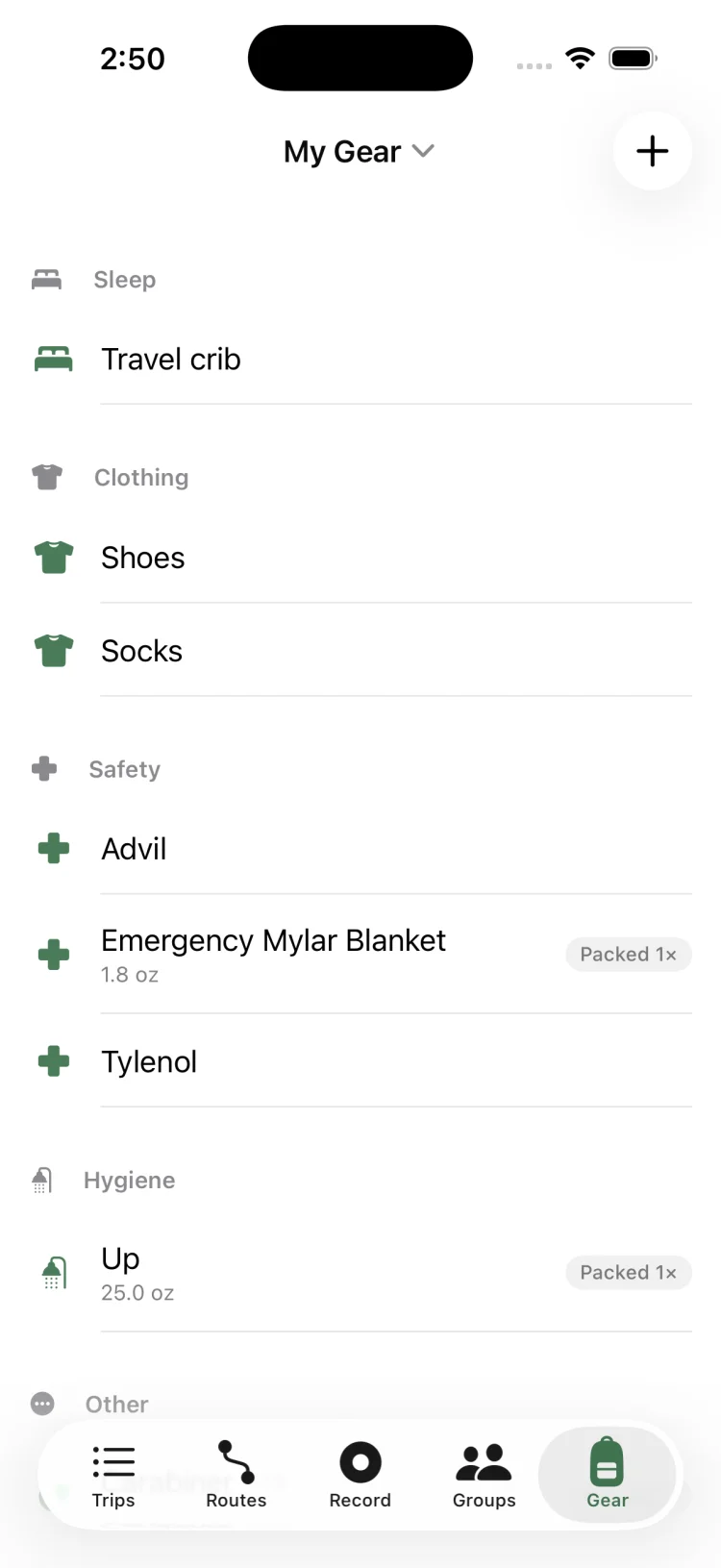
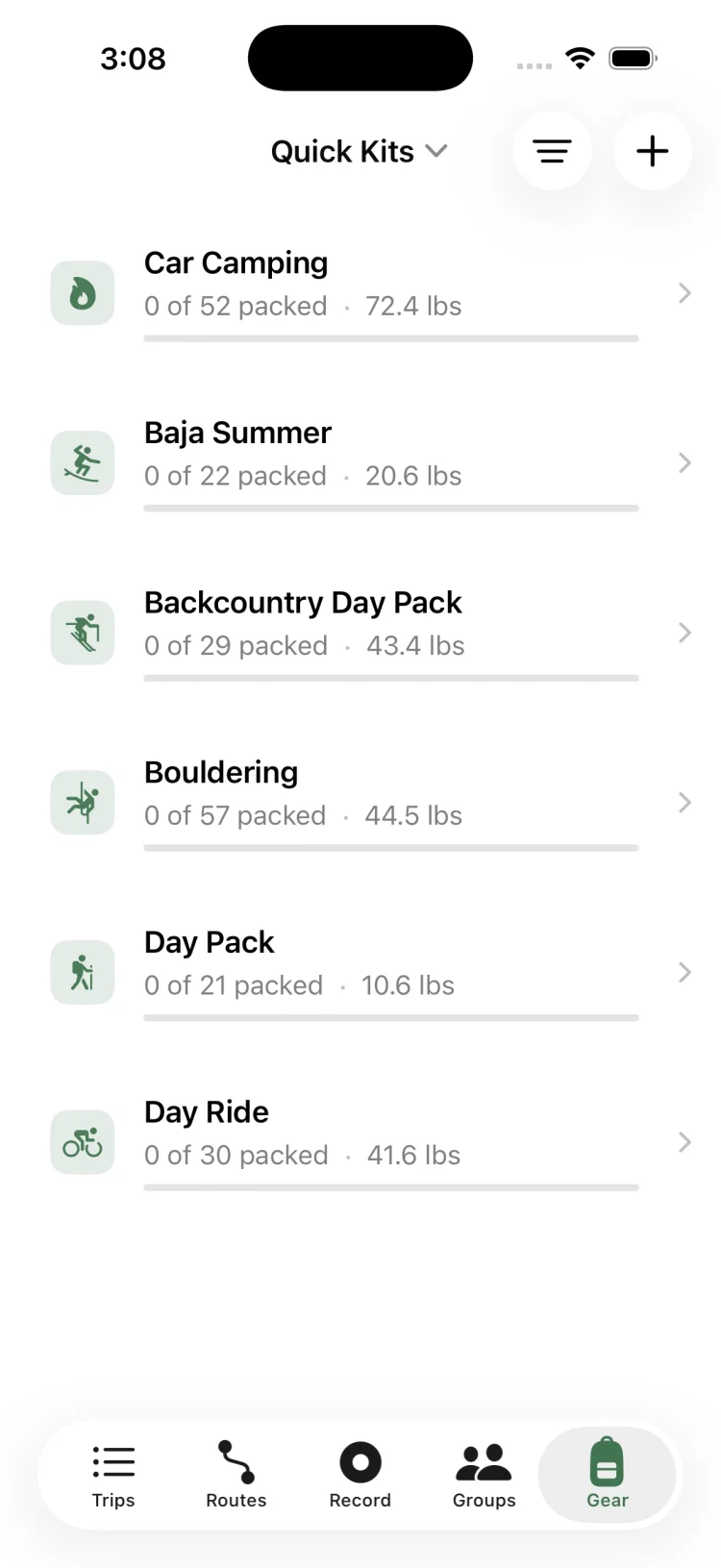
Build a reusable car camping packing list so you never forget anything:
- Create a trip and choose Camping as the trip type — GoVenture loads a starter checklist.
- Add your personal items by category (shelter, kitchen, food, comfort, clothing, etc.).
- Build Quick Kits for your kitchen setup, sleep system, and first aid so you can add them to future trips in one tap.
- Check items off as you pack, and review the list again before you leave to catch anything missed.
Ten things people always forget
These are the items that do not make it into the car until the third or fourth trip, when you finally remember.
- Extra tent stakes. The ones that came with your tent are never enough, and you will lose or bend at least two.
- Camp chairs. Often left in the garage until you arrive at camp and realise you have nowhere to sit.
- Dish tub or basin. For washing dishes. You will not realise you need it until after the first meal.
- Headlamp batteries. The headlamp is on the list; the batteries are not, and they are dead when you turn it on.
- Trash bags. Every campsite generates more trash than you expect. Bring heavy-duty bags.
- Firewood restrictions. Many areas prohibit transporting firewood due to invasive species. Check before you bring wood from home.
- Matches or lighter. Stove igniters fail. Always bring a backup fire-starting method.
- Coffee filters. If you bring a coffee setup, bring filters. This is the top forgotten item in the coffee category.
- Sunscreen. Even on overcast days, you will burn. Pack it with your toiletries so it is visible.
- Cash. Many campgrounds only accept cash for fees, firewood sales, or ice. Bring small bills.
How car camping differs from backpacking
If you have done backpacking trips before, car camping feels like a different activity. The mindset shifts from "every ounce matters" to "if it fits, it comes."
Weight is not the constraint
You are not carrying the gear on your back, so the five-pound cast-iron skillet, the full-size cooler, and the camp chairs are all fair game. Your vehicle's cargo capacity is the limit, not your pack's weight rating.
Volume and organisation are the constraints
The new problem is fitting everything into the car in a way that lets you access what you need without unloading the entire vehicle. This is where bins and totes become essential (see below).
Comfort items are allowed
Real pillows. An air mattress. A portable table. A lantern instead of a headlamp. Camp chairs instead of sitting on a log. These are luxuries on a backpacking trip and standard on a car camping trip.
Food is fresh, not dehydrated
With a cooler, you can bring fresh eggs, bacon, vegetables, meat, cheese, milk — actual food, not freeze-dried meals. Cooking at camp becomes enjoyable rather than utilitarian.
Bin organisation system that actually works
The single best thing you can do for car camping is use a bin system. Plastic storage bins or totes keep gear organised, protected and easy to find.
Suggested bin breakdown
- Kitchen bin: Stove, fuel, cookware, utensils, plates, mugs, dish soap, sponge, dish towel, trash bags. Everything for cooking and cleaning in one container.
- Food bin or cooler: Non-perishable food in a bin; perishable food in the cooler. Keep condiments and spices together in a smaller container inside the food bin.
- Tent and shelter bin: Tent, stakes, guylines, footprint, mallet. Keep this separate so you can set up the tent without digging through other gear.
- Clothing and personal items bin: Extra clothes, layers, toiletries, towel. One bin per person for larger groups.
- Tools and repair bin: Multi-tool, duct tape, rope, bungee cords, repair kits, first aid kit, fire starter.
Label the bins clearly, and pack them in the car in reverse order of use: tent bin accessible first (you set it up immediately), kitchen bin next (you cook soon after), food bin and cooler last (you access these multiple times).
Pre-departure 15-minute check
The night before you leave, run through this final checklist. It catches the forgotten items and the things you assumed were already packed.
- Tent, stakes, guylines, footprint in the bin.
- Sleeping bag, pad or mattress, pillow loaded.
- Stove, fuel, lighter in the kitchen bin.
- Cooler packed and chilled; ice or ice packs inside.
- Food bin packed with meals and snacks for all days.
- Headlamps tested (batteries fresh).
- First aid kit checked and complete.
- Water containers filled or plan to fill at camp confirmed.
- Campground reservation or permit printed or saved offline.
- Cash in wallet (small bills for fees).
- Phone charged, offline maps downloaded if needed.
- Weather forecast reviewed; extra layers packed if rain or cold expected.
- Trash bags, toilet paper, hand sanitiser confirmed.
- Camp chairs in the car.
- Emergency contact list in the first aid kit.
If you are camping with a group, send this checklist to everyone two days before departure and ask them to confirm their assigned items. See the group camping trip planning guide for the full coordination process.
Leave no trace and campfire rules
Car camping happens in established campgrounds, but Leave No Trace principles still apply.
Pack out all trash
Do not assume the campground has trash service. Many do not. Bring heavy-duty trash bags and pack out everything you brought in, including food waste.
Use established fire rings only
If campfires are allowed, use the existing fire ring at your site. Do not build new rings or move rocks. Never leave a fire unattended, and extinguish completely before leaving the site or going to bed — drown it with water, stir the ashes, drown it again. "Cold to the touch" is the standard.
Check fire restrictions before you go
Many campgrounds ban campfires during high fire danger periods. Check current restrictions on the campground's website or call ahead. If fires are banned, bring a camp stove for cooking — open flames of any kind are usually prohibited during fire bans.
Respect quiet hours
Most campgrounds enforce quiet hours from 10pm to 6am. Keep noise low, especially music. Other campers came for quiet, not your playlist or your late-night conversation volume.
Dispose of grey water properly
Dishwater and hand-washing water (grey water) should go into designated disposal stations if available, or be scattered widely away from water sources and campsites. Never dump it directly into a stream, lake or storm drain.
Plan your next camping trip in GoVenture
Free on iPhone and iPad. Build reusable packing lists with Quick Kits, track your trips, and keep everything organised in one place. Free with unlimited trips; Pro unlocks route drawing, unlimited gear lists, offline maps and extra map styles.
Download on the App Store →Frequently asked questions
What should I bring for a weekend camping trip?
For a two-night car camping trip, bring a tent, sleeping bag, sleeping pad, camp stove or grill, cooler, food and water, camp chairs, a table, a lantern, layers for changing weather, rain gear, first aid kit, headlamps, toiletries, trash bags and firewood if allowed. The full category checklist is in the article above.
What do people always forget when car camping?
The ten most commonly forgotten items are extra tent stakes, camp chairs, a dish tub or basin, headlamp batteries, trash bags, firewood restrictions info, matches or a lighter, coffee filters, sunscreen, and cash for the campground fee. Check these specifically before you leave.
How is car camping different from backpacking?
Car camping removes the weight constraint — you can bring camp chairs, a cooler, a large tent, a full kitchen setup, and comfort items you would never carry on your back. The trade-off is volume and organisation: you need bins or totes to keep everything sorted, and a system for packing the vehicle so you can find things without unloading everything.
Is there an app for car camping packing lists?
GoVenture is a free iPhone app with a camping trip type that includes a starter gear template. Add your items with categories, build reusable Quick Kits for your kitchen or sleep setup, and check items off as you pack. It keeps the list in one place instead of across notes and screenshots. Compare it to other trip planning apps here.