Every maker who has sold online knows the arithmetic that never appears in the listing price: the marketplace's cut, the payment fee, the mailer, the bubble wrap, the trip to the post office, the one mug in ten that arrives in pieces anyway. For high-value lightweight goods the arithmetic works. For most everyday handmade work, it quietly eats the margin — which is why the fastest-growing venue for makers is the oldest one: the people who live nearby.
The short version
Local selling removes fees, shipping and breakage from the equation, and it favors exactly the goods online punishes: heavy, fragile, bulky or modestly priced. Lead with functional items people reorder — soap, candles, boards, pottery — and let seasonal pieces spike around holidays. Price from materials plus real labor, against other makers rather than factories. Photograph honestly, hand off in person, and let repeat buyers and word of mouth do what an algorithm never will. Check sales-tax and product-specific rules once selling turns regular.
The economics of selling nearby
Compare the same handmade mug sold two ways. Shipped: marketplace fee, payment fee, mailer and wrap, postage, an hour of packing and queueing, plus a breakage rate that is never zero. Local: the buyer messages you, walks over, and hands you the full price. The mug is identical; the maker's net is not remotely.
Local also sells things online cannot. A buyer who picks up a cutting board feels the weight and the finish; a candle gets smelled; a knitted blanket gets touched. For sensory goods, in-person handling is not a nicety — it is the conversion mechanism. And the buyer who loved the soap is back in six weeks, because reordering from a neighbor is easier than reordering from a website.
None of this makes online selling wrong. Lightweight, high-value, niche work with a national audience belongs online. The point is that "put it on a marketplace" is a strategy, not the strategy, and for a large class of handmade goods it is the worse one.
What sells locally
| Category | Local advantage | Repeat potential |
|---|---|---|
| Soap, candles, balms | Smell test in person; consumable | Highest — regulars reorder for months |
| Pottery & ceramics | Fragile to ship; weight and glaze sell by touch | Good — sets grow one piece at a time |
| Woodwork (boards, shelves, planters) | Heavy and awkward to ship; quality is tactile | Good — gifts drive reorders |
| Plants in handmade pots | Nearly unshippable; irresistible in person | High — plant people never stop |
| Knitted & sewn goods | Fit and feel in person; custom orders | Moderate — seasonal |
| Jewelry | Try-on beats photos | Moderate — gift cycles |
| Seasonal (wreaths, ornaments, gift sets) | Timing beats shipping delays | Annual, reliable spikes |
The pattern across every successful local maker: function outsells decor at neighborhood price points, and consumables build the base. The soap and candle buyers are your monthly regulars; the pottery and boards are their gift purchases; the wreaths are December. A small line with one consumable anchor beats a broad line of one-offs.
The rules, briefly
Crafts skip food law entirely — no cottage food rules, no kitchen inspections — but regular selling touches other rulebooks worth a one-time check:
- Sales tax. Many states expect registration and collection once you sell regularly, even at small scale. Your state revenue department's site answers this in ten minutes.
- Business licensing. Some cities want a simple home-business license for ongoing enterprise; occasional hobby sales usually fly under it. Local rules decide where that line is.
- Product-specific rules. Soap and cosmetics have federal labeling expectations, and anything marketed for babies and children carries real safety regulation — research your specific product category before scaling it.
- Craft fairs often require a temporary vendor permit; the organizer will tell you.
None of this is heavy at neighborhood scale, but "I checked once" beats "I assumed" — the same principle as every food guide in this library, minus the health department.
Pricing handmade work
The floor is not negotiable: materials plus labor at an hourly rate you would accept from an employer. If the market price for an item cannot clear that floor, the item is a gift or a hobby piece, not a product — better to know before making twenty.
Above the floor, position against other makers, never against factories. The buyer comparing your board to a big-box board was never your buyer; the one comparing it to craft-fair boards is. Check craft fair and online handmade prices for genuinely comparable work, and remember your local advantage: with no fees or postage in the chain, you can charge slightly less than your shipped price and still net meaningfully more per sale.
State prices plainly on listings — the general case against "message for price" and haggling is made in the pricing guide and applies doubly to handmade work, where negotiation always becomes negotiation about the value of your labor. Custom commissions are the exception: quote those individually, with a deposit.
Listing and selling well
Handmade goods are visual goods, and the listing photo does most of the selling. Natural light, plain background, and at least one photo showing scale or the item in use — a mug held, a board with bread on it, the candle lit. Photograph the actual item where pieces vary; buyers of handmade expect variation and reward honesty about it.
In the description: dimensions, materials, care instructions, and the one line about how it is made that mass-produced goods cannot say. Then handle the exchange like every good local sale — prompt replies, pickup arranged in chat, porch handoff or a minute at the door, payment as agreed. For gift seasons, note your lead time for custom work early; December orders are made in October.
How JustRype fits
JustRype's marketplace covers handmade goods alongside garden produce and home baking — because the person who wants local eggs is very often the person who wants a local maker's soap, and they are browsing the same neighborhood feed.
Your work, in front of nearby buyers
Listings surface on the map and feed for the people close enough to pick up — which for heavy, fragile, sensory goods is exactly the right audience. No fees on the exchange, no shipping, no algorithm ranking your work against a million distant competitors.
A profile that becomes a following
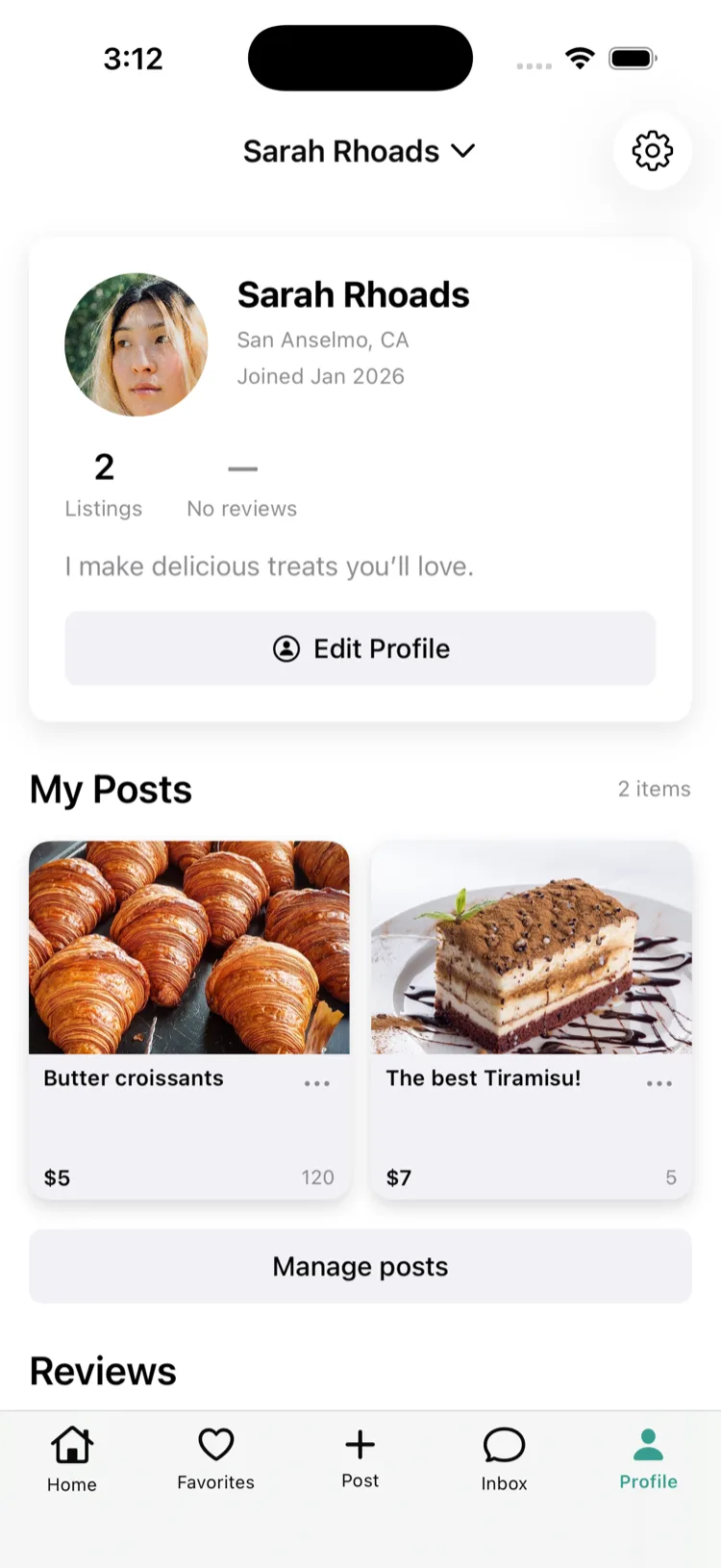
Your profile collects your listings, so the buyer who found one candle can see the whole line. Ratings build with each handoff, and in local selling reputation compounds — the neighborhood remembers who made their favorite mug.
A business page for the real thing
When the craft becomes a small business — seasonal lines, commissions, market appearances — a business page gives it a permanent pin on the neighborhood map, findable year-round.
First local sale, this week
For a maker with finished work on the shelf:
- Pick three finished pieces, including one consumable if you make any.
- Photograph them in daylight with something for scale.
- Price from materials plus real labor, checked against other makers.
- List with dimensions, materials and a stated price.
- Arrange pickup in chat and hand it over — no bubble wrap involved.
General information, not legal advice
Sales tax, business licensing and product-safety rules vary by state, city and product category. This guide is general information, not legal or tax advice. Check your state and local requirements — and any rules specific to what you make — before selling regularly.
JustRype is a venue that connects neighbors. Buyers and sellers are responsible for complying with the laws that apply to them.
Frequently asked questions
Where can I sell handmade crafts besides Etsy?
Locally: neighborhood marketplace apps like JustRype, craft fairs and holiday markets, farmers markets that admit makers, local shops that take consignment, and your own network. Local selling has no marketplace fees on the exchange, no shipping costs or breakage risk, and buyers who can handle the work before buying — advantages that matter most for heavy, fragile or lower-priced items where shipping economics hurt.
What handmade items sell best locally?
Things that are hard to ship and better in person: pottery and ceramics, candles and soap, woodwork like cutting boards and shelves, plants in handmade pots, knitted and sewn goods, jewelry, and seasonal items — wreaths, ornaments, gift sets — around holidays. Function sells over decor at neighborhood price points: things people use daily and reorder, like soap, candles and boards, generate the repeat buyers that make local selling sustainable.
How do I price handmade items?
Materials plus labor at a real hourly rate is the floor — if a sale price does not cover both, you are paying to work. From there, look at comparable handmade (not mass-produced) prices at craft fairs and online. Local selling lets you keep prices slightly below your shipped-online price while netting more per sale, since there are no marketplace fees or postage. Resist pricing against factory goods; your comparable is other makers.
Do I need a license to sell handmade crafts?
Non-food crafts avoid food law entirely, but other rules can apply: many states expect sales tax collection or registration once selling is regular, some cities want a business license for ongoing home enterprise, and certain products — cosmetics like soap and lotion, children's items, candles — carry their own safety and labeling requirements. Occasional hobby sales are usually simple; check your state and city requirements once selling becomes routine.
Is selling locally better than selling online?
For many makers they complement each other, but local wins where shipping hurts: heavy, fragile, bulky or modestly priced items. Local sales have no packaging and postage cost, no transit breakage, no fee percentage on the sale, and no algorithm deciding your visibility. Online wins for lightweight, high-value, niche items with a national audience. A common pattern is local-first for volume and community, online for the specialty pieces.